
Banarasi Silk Sarees: What Makes One Genuine, and How to Check
17 October 2026 · silksaree.shop · 4 min read
తెలుగులో చదవండిGoogle Translate
In short: Banarasi silk sarees are brocade sarees woven in six districts of Uttar Pradesh around Varanasi. The name is GI-protected, so ask where a piece was woven and turn the cloth over.
Banarasi silk sarees are the ones wedding customers ask for by name, and the ones sellers copy most. If you buy or sell them, you need a plain answer to one question: what makes a saree genuinely Banarasi, and how do you check one in your hands? Below are the rules, the weave names and a short set of checks.
What "Banarasi" actually means
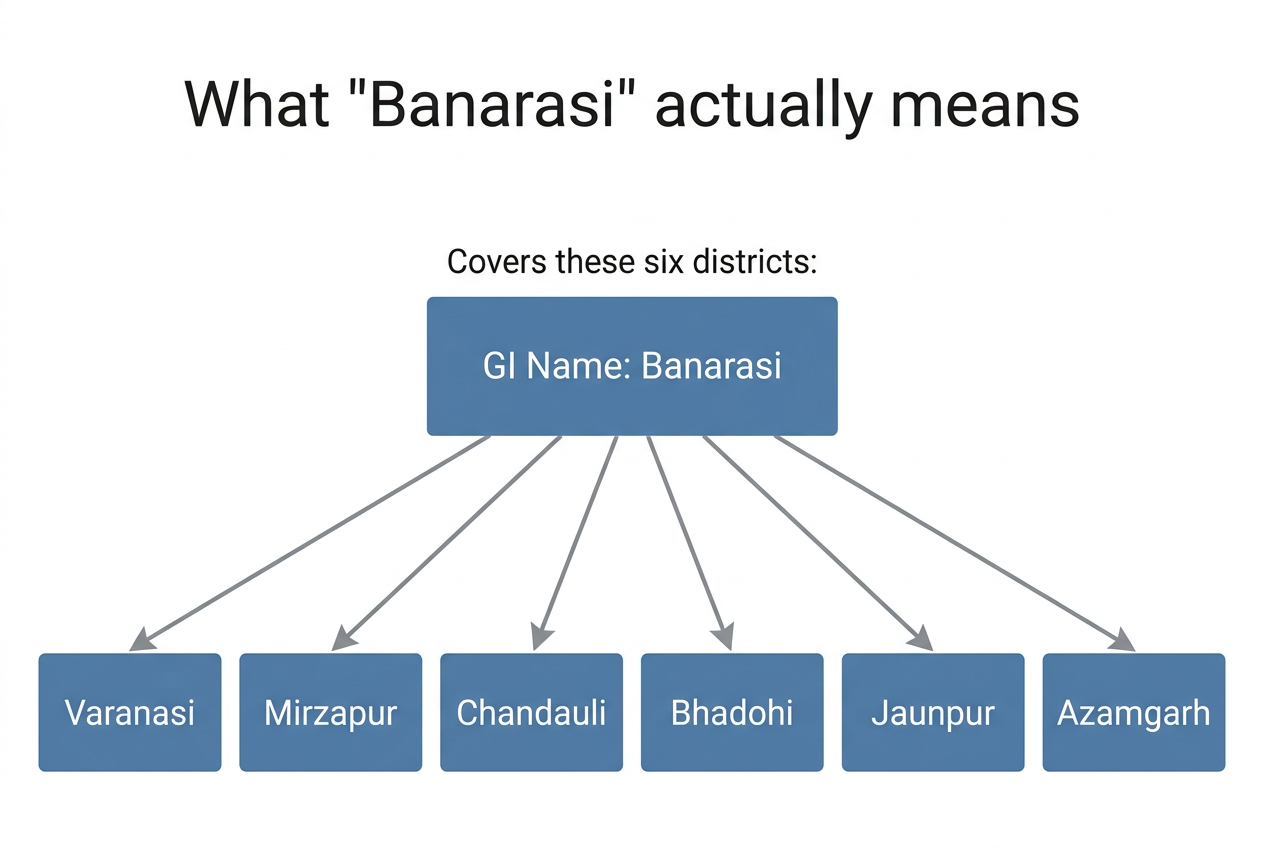
It isn't only a style. It's a place name with legal protection. The Banaras brocades and sarees were granted a Geographical Indication (GI) in 2009, after an application filed in 2007. The GI covers six districts of Uttar Pradesh: Varanasi, Mirzapur, Chandauli, Bhadohi, Jaunpur and Azamgarh.
A saree woven outside those districts may be inspired by Banarasi work, but it shouldn't be sold under the name. That matters at your counter. If a supplier says "Banarasi", the fair follow-up is: where was this woven?
The cloth itself is brocade. Extra weft threads, often zari, are woven in to raise the pattern as the cloth grows. The same source says a saree can take from 15 days to a month, and sometimes up to six months, depending on how dense the design is.
The weaves you'll hear at the counter
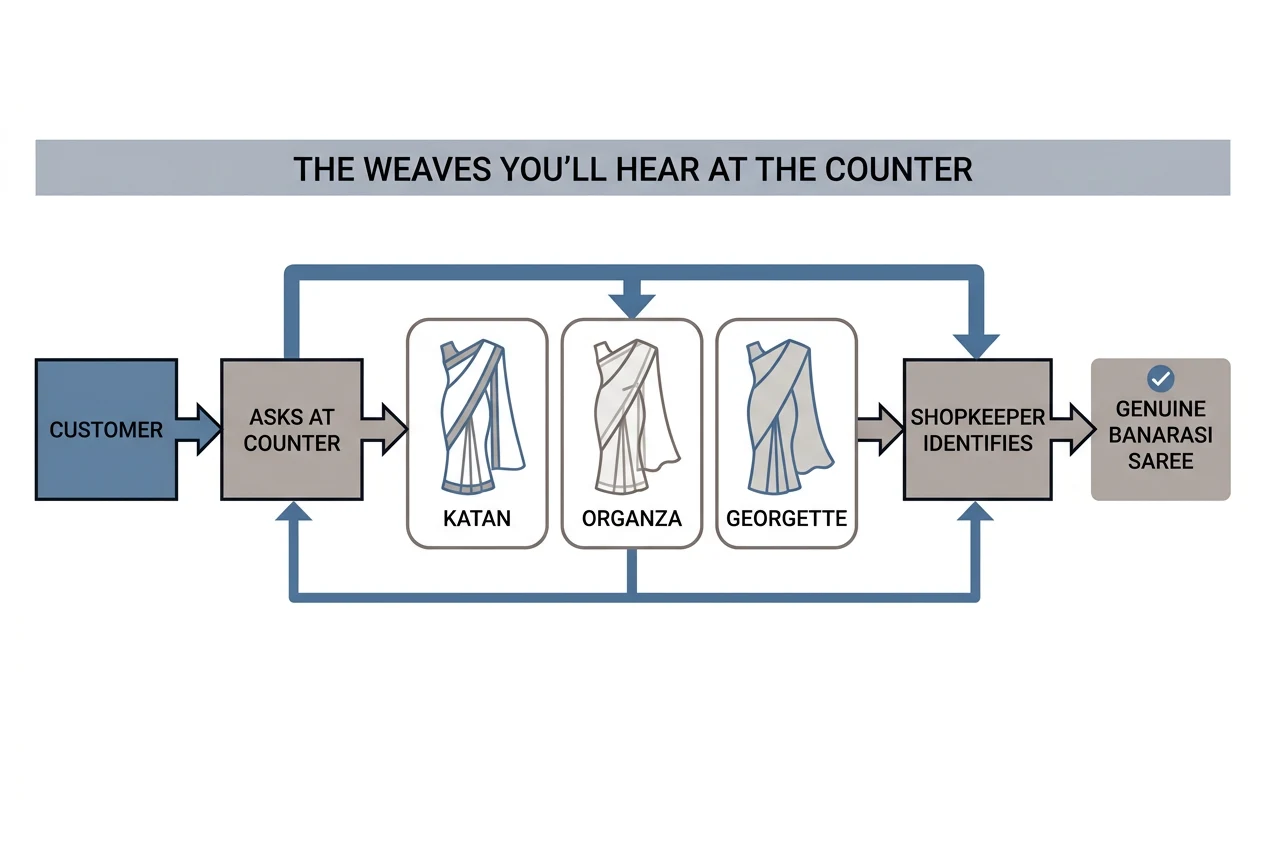
Customers ask for Banarasi sarees by fabric name. These are the ones worth knowing, as commonly described in the trade:
- Katan: the classic pure silk, smooth and sturdy. The usual choice for bridal buying.
- Kora (organza): sheer and light, with zari and silk.
- Georgette: light, with a soft drape.
- Shattir: a lighter base used for newer designs. Sellers describe it differently, so ask what yours is made of.
Designs add a second set of names. Jangla is a dense all-over pattern of vines and flowers. Tanchoi is worked without zari, in self-colour or close shades. Cutwork and butidar (small scattered motifs) finish the list of regular terms. Learn four or five well. You'll do better explaining katan and tanchoi clearly than reciting twelve names your staff can't tell apart.
How to check a Banarasi silk saree
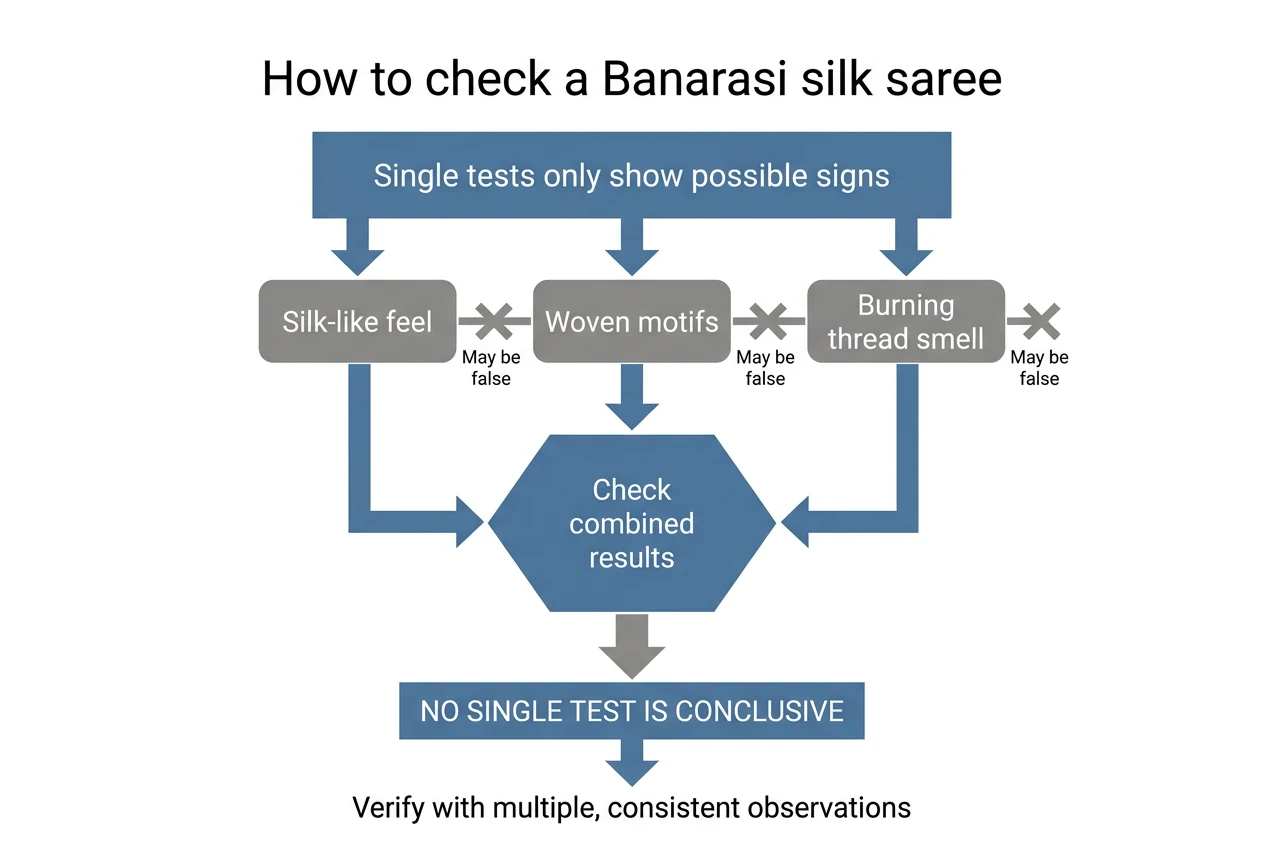
No single test settles it. Use several, and treat each one as a reason to ask a question.
- Turn it over. In a brocade, the pattern is part of the weave. Long floats of thread behind a motif are normal on brocade and will be trimmed or left loose, so look at how neat and even they are rather than whether they exist.
- Open a few from one lot. Handwork shows small differences in spacing and border. Pieces that match down to the last motif point to a machine.
- Look at the zari. It should sit in the cloth, not on it. If it looks flat, glassy or unnaturally bright, ask what it's made of.
- Find the labels. The Silk Mark is run by the Silk Mark Organisation of India under the Central Silk Board, and it attests that a textile is pure natural silk. It's advisory, not a law, so a missing label is a question, not proof. The Handloom Mark is the separate label for handwoven cloth.
- Scan the code, where there is one. A team at IIT-BHU worked out a way to weave a QR code into a saree, along with the handloom mark, Silk Mark and GI logo, on a plain patch before the blouse piece. Not every saree carries one.
Ask your supplier for the GI details and the labels in writing. Keep them with your stock record.
Handloom, power loom and the word "Banarasi"
Banarasi describes the place and the style. Handloom or power loom describes how the cloth was made. A saree can be one and not the other. So a seller who answers "Banarasi" to a question about the loom hasn't answered it. If you're deciding how much of each to carry, read Handloom Sarees: What Makes One Handloom, and How to Buy and Powerloom vs Handloom Silk Sarees: How to Split Your Stock.
What to ask before you buy Banarasi silk sarees for your shop
Heavy brocade ties up money. Buy with a plan.
- Where was each saree woven, and can you show it in writing?
- Is the silk pure, and is there a Silk Mark?
- Is it handloom or power loom, and is there a Handloom Mark?
- Can I open three or four from the lot and see the back?
- Is the set mixed, or one design and one colour?
Start with one or two weaves your staff can describe. Keep Banarasi in its own line in your stock book, so after a wedding season you can see what moved.
What to do next
Take one saree that was sold to you as Banarasi. Check its labels and turn it over. Then ask your supplier for the weaving district. Do the same with your staff, so the whole shop uses the same words.
To see how a saree house in Rayadurg describes its own weaving, silksaree.shop sells designer silk sarees wholesale in sets of 28 and takes enquiries on WhatsApp. Its sarees aren't sold as Banarasi.