
Silk Sarees vs Semi Silk Sarees: How to Tell, What It Costs
1 November 2026 · silksaree.shop · 8 min read
తెలుగులో చదవండిGoogle Translate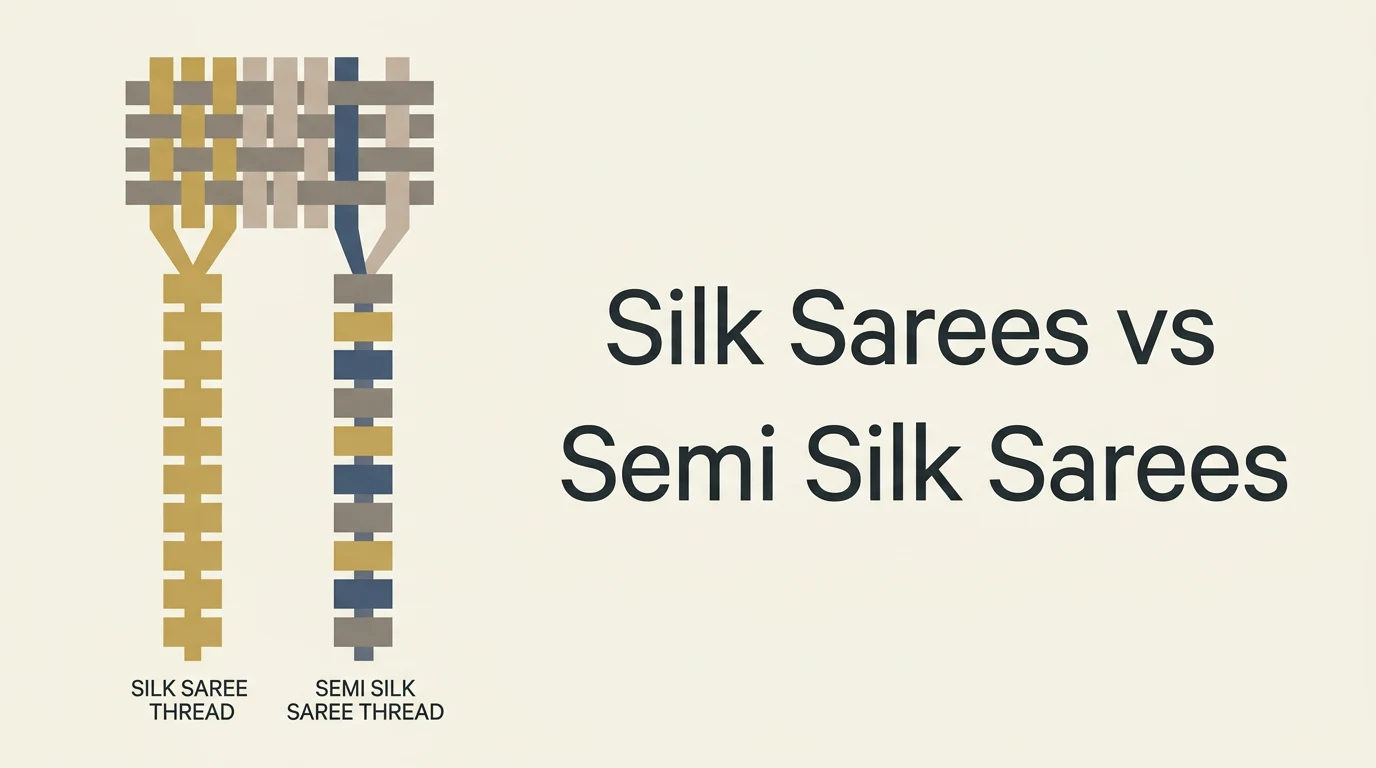
In short: Semi silk sarees mix silk with another fibre. Silk sarees are all silk. Only a label or lab settles it. Yarn and weaving alone put a pure silk saree near ₹5,175 to make.
Semi silk sarees and silk sarees look close on a hanger. The price tag is often the only clue you get. Nobody blames you for that. This post is for anyone who wants to know what each one is, how it is woven, and why one costs more to make than the other, which is something the shop rarely explains while you stand at the counter holding both.
What a silk saree and a semi silk saree actually are
A pure silk saree is woven from silk thread alone. In India that means natural silk, most often mulberry silk, which silkworms spin and which is then reeled from the cocoon.
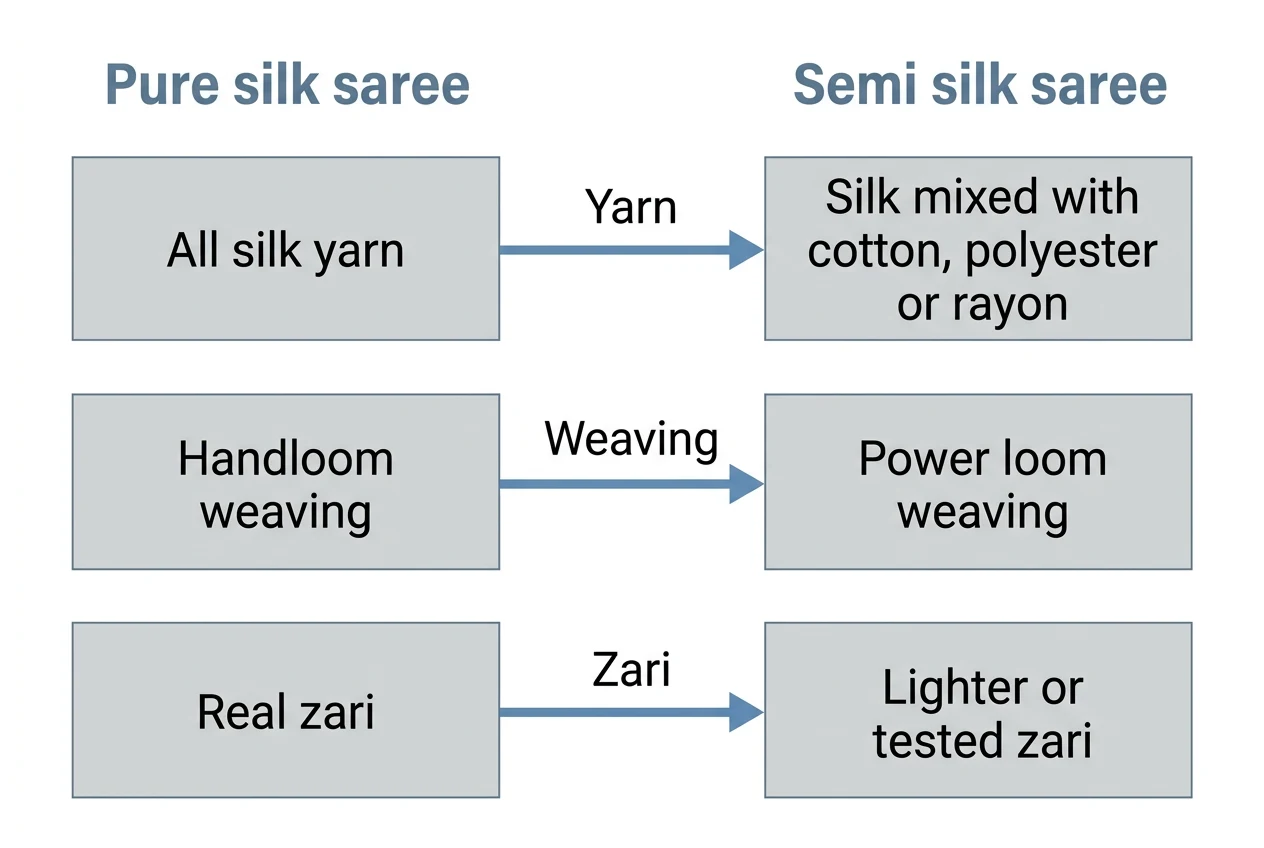
"Semi silk" has no single fixed definition. Retailers use it for a blend of silk with cheaper fibres such as cotton, polyester or rayon, made to give the look of silk for less. The mix changes from maker to maker, so the useful question is always "what is in it, and where?". A common build keeps silk in the warp, the lengthwise threads, and puts a cheaper thread in the weft, the crosswise ones.
Art silk is a third thing. It is made to copy silk and has none in it, usually viscose or polyester. Semi silk sits in the middle. It has some silk.

How to tell silk sarees from semi silk sarees
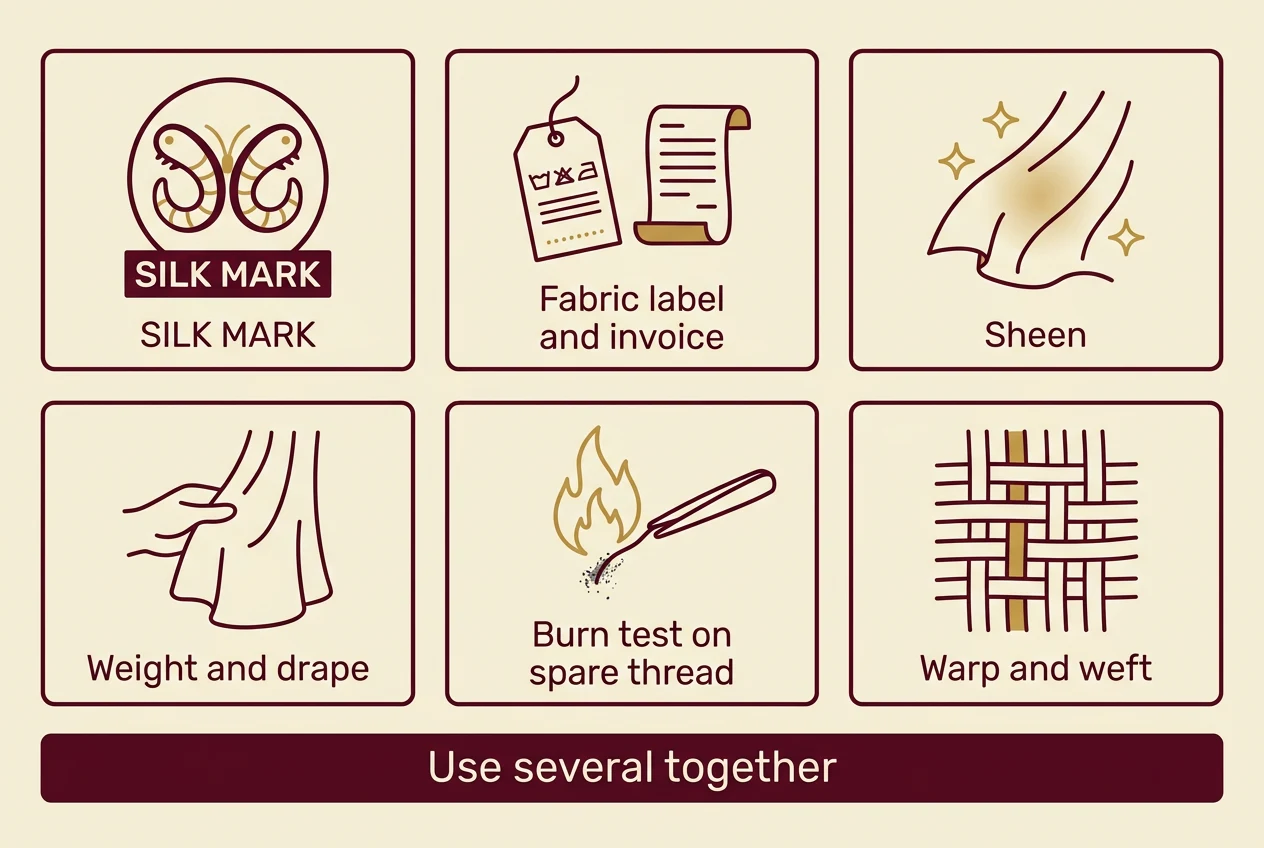
No single test settles it. Use several together, and trust a label over your fingers.
- Look for the Silk Mark. The Silk Mark Organisation of India runs a label scheme for pure natural silk. A blend is not what that label is for. Check the tag and ask the seller for the bill.
- Read the fabric label and the invoice. A seller who knows the cloth writes the fibres on it. If it says "silk" with no percentage, ask.
- Check the sheen. Pure silk shines softly and shifts colour as the cloth moves, because each thread reflects light at a different angle. Blends often shine flatter or brighter, in one even tone.
- Feel the weight and drape. Pure silk is warm to the hand and falls in soft folds. Blends heavy in polyester can feel slick and cool.
- Try the burn test only on a spare thread. Pull a loose thread from the inner hem. Pure silk smells like burning hair and leaves crushable ash, while polyester smells like plastic and melts into a bead. A blend can give mixed results, and some synthetics pass. Don't rely on this test alone, and do it only with the seller's permission.
- Pick the warp and weft apart. On a semi silk piece, pull one thread from the length and one from the width. If they look and burn differently, you have a blend.
No straight answer on the fibre? Treat it as semi silk at best.
This video, in Hindi, is about telling pure silk from art silk:
How a silk saree is made, step by step
The fibre sets the price long before anyone sets up the loom. Here is the path from cocoon to cloth.
- Cocoons. Silkworms spin cocoons, and the farmer sells them.
- Reeling. The cocoons are boiled and the continuous filament is drawn off and wound into raw silk.
- Twisting. Several filaments are twisted into yarn strong enough to weave.
- Degumming and dyeing. The natural gum is boiled off and the yarn is dyed in the saree's colours.
- Warping and setting the loom. Thousands of threads are lined up lengthwise and fixed on the loom. This is the warp.
- Weaving. The weft is passed across thread by thread. Zari, the metallic thread, is worked into the border and pallu as the cloth grows. A jacquard attachment keeps motifs exact from the first saree to the last.
- Finishing. The saree is cut, checked, folded and packed.

A semi silk saree follows the same path. The change starts at step 3, where part of the yarn is a cheaper fibre that is already spun, so there is less silk to reel, twist, degum and dye. Many semi silk sarees are also woven on power looms, which weave faster than a hand loom. A handloom takes more days per saree, and that time is paid for.
Where the price goes in a pure silk saree
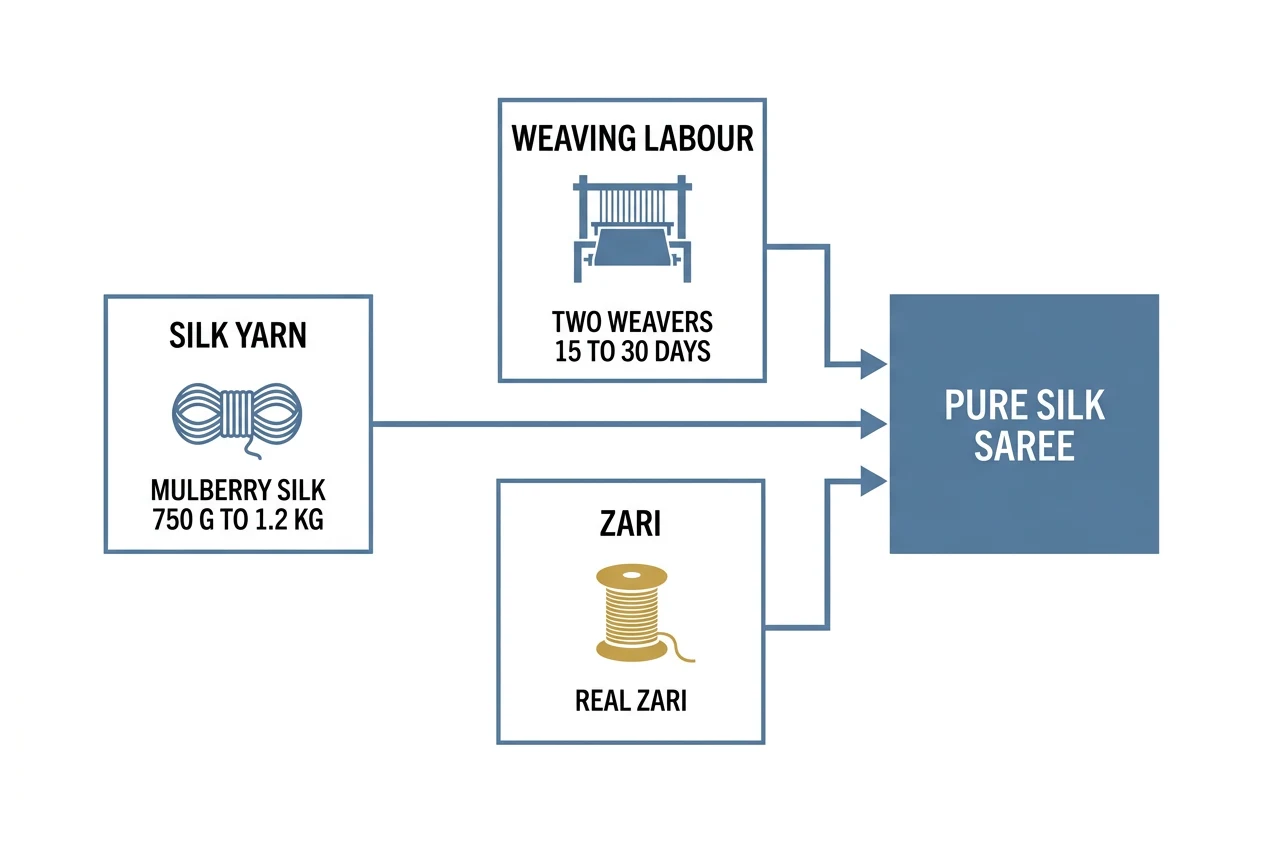
No one publishes a clean line-by-line cost sheet for a silk saree. The sources below are retailers and an encyclopedia, so read every figure as a rough guide with no date attached. Still, three inputs carry most of the cost.
- Silk yarn. A Kanchipuram seller says one saree uses about 750 g to 1.2 kg of mulberry silk. Wikipedia's entry on Paithani puts silk warp yarn at about ₹2,900 to ₹3,200 per kg and weft at ₹2,400 to ₹3,000 per kg, with no year given.
- Weaving labour. The same Kanchipuram seller gives ₹3,000 to ₹15,000 for two weavers working 15 to 30 days on one saree.
- Zari. The Paithani entry says real zari costs about ₹1,800 for 250 g. Retailers say zari can be a large share of a wedding saree's price.
What is the minimum cost to make a pure silk saree?
Take the lightest figures above and add them up. This is my own arithmetic on those quoted inputs. It is not a published cost sheet.
| Cost item | Low-end figure |
|---|---|
| Silk yarn, 750 g at ₹2,900 per kg | ₹2,175 |
| Weaving labour, lowest figure quoted | ₹3,000 |
| Running total | ₹5,175 |
That ₹5,175 leaves out dyeing, twisting, any zari, loom upkeep, thread wasted in weaving, packing and the maker's margin. The true floor is higher. By how much, nobody publishes.
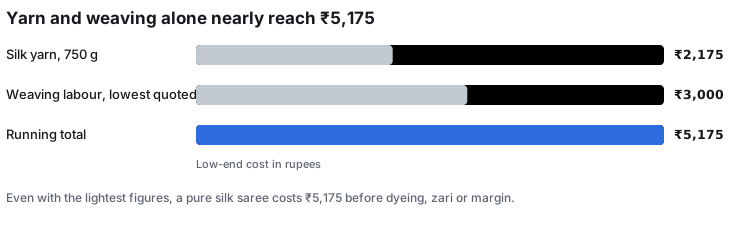
What does that tell a buyer? Retailers put simple pure silk at roughly ₹5,000 to ₹15,000. A saree sold as pure silk far below the ₹5,000 mark needs a hard look, because the yarn and the weaver's time alone come close to that.
What changes when you make semi silk sarees
I found no published cost breakdown for semi silk, so I won't invent one. What I can say is where the saving comes from:
- Less silk yarn. Silk is the dearest input. Replace part of it with cotton or polyester and the yarn bill falls by however much silk you swap out.
- Faster weaving. Power looms cut the days of labour per saree, and labour was the largest single line above.
- Less or lighter zari. Many semi silk designs use a lighter zari or a tested zari instead of real zari. Ask what the border is made of.
The saving is real. So is the trade. A semi silk saree is a different cloth, with a different feel and shelf life, and when it is sold honestly as a blend it suits weddings and family functions where one budget has to cover many pieces.
Semi silk sarees from Kenche Mallikarjuna Handlooms
Kenche Mallikarjuna is a saree house in Rayadurg, Andhra Pradesh. It sells designer silk sarees wholesale to saree shops, boutiques and resellers across India, in boxed sets of 28. Most of its sarees are woven on power looms and some on handlooms. It also weaves to order in the buyer's colours, border and motif.
Manufacturing rates for semi silk sarees are not published. Kenche Ramesh gives them personally on WhatsApp, because the cost moves with the yarn mix, the zari, the design and the quantity. When you message, say what you want:
- The kind of saree: semi silk, and the fibre mix you want.
- The border and motif, and the colours, with a photo if you have one.
- How many sets you want. One set of 28 is the minimum order.
Kenche Mallikarjuna Handlooms · Rayadurg, Andhra Pradesh Designer silk sarees direct from the maker, in boxed sets. Minimum order: 1 set of 28 sarees. Ask for factory rates on WhatsApp: +91 94409 21080
FAQ
What is the difference between pure silk and semi silk sarees?
A pure silk saree is woven only from silk. A semi silk saree mixes silk with another fibre such as cotton or polyester. The mix is not fixed, so ask the maker what is in the cloth.
How can I check if a saree is pure silk at home?
Look for the Silk Mark label, read the fabric tag and invoice, and judge the sheen and drape. A burn test on a spare thread can help. It is not conclusive on its own, since blends and some synthetics give mixed results.
What is the minimum cost to make a pure silk saree?
Adding only the yarn for a 750 g saree and the lowest weaving labour quoted gives about ₹5,175. Dyeing, zari, wastage and margin come on top, so the real cost is higher. These inputs come from retailer and reference figures with no year, so treat the total as a rough floor.
Are semi silk sarees cheaper to make than silk sarees?
Yes. They use less silk yarn and are often woven on power looms. How much cheaper depends on the yarn mix, the zari and the design.
Where can I get semi silk sarees at factory rates?
Kenche Mallikarjuna Handlooms in Rayadurg sells in sets of 28 and gives rates on WhatsApp on +91 94409 21080.