
15 Small Business Ideas in India (2026): Make Rs 1 Lakh Profit
8 October 2026 · silksaree.shop · 13 min read
తెలుగులో చదవండిGoogle Translate
In short: The best small business ideas for India in 2026 fit the money and skills you already have. Here are 15, plus a plan to make ₹1 lakh profit from sarees: about 250 sold at ₹400 profit each.
If you are searching for small business ideas, you probably do not want a list of 100. You want to know which few are worth your savings, and how long it takes before money comes back.
So this guide does two jobs. First, it gives you 15 small business ideas to start in India in 2026, sorted by budget and by the skill each one needs. Second, it picks one of them, the saree business, and works out what it takes to make your first ₹1 lakh in profit. That second part is written for resellers, boutique owners and shop owners who can buy in sets.
Budget bands and income figures below are my own planning judgement, not quotes. Your town, supplier and season will change them, so replace every number with your own before you spend.
Last updated: 8 October 2026. Written by: the silksaree.shop team.
Before you pick: three things every small business needs
Most failed small businesses did not have a bad idea. They skipped something dull. Do these three first.
1. Register on Udyam. It is the government's registration for micro, small and medium businesses. The Udyam portal says the process is totally free and that you pay no fee to anyone. On 7 October 2026 it showed 5,44,52,430 registrations, so you would be joining a very large crowd of small owners. Only an Aadhaar number is needed to start. Be careful of agents who charge for it.
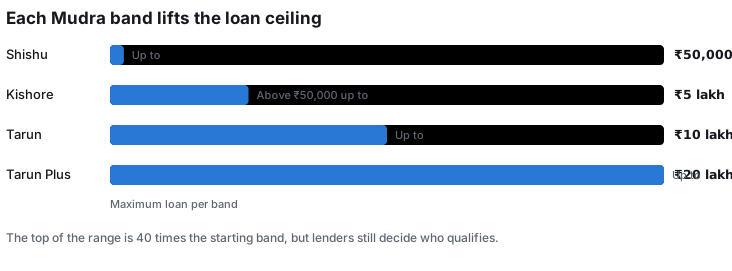
2. Know what a Mudra loan can do. The Pradhan Mantri MUDRA Yojana lends to small businesses without collateral. As Drishti IAS summarises it, Shishu covers loans up to ₹50,000, Kishore covers above ₹50,000 up to ₹5 lakh, Tarun covers up to ₹10 lakh, and the newer Tarun Plus goes up to ₹20 lakh. Check the current rules with your bank before you apply, because lenders decide.
3. Test before you buy in depth. Sell ten units before you stock a hundred. A small first order tells you more than a month of research.
15 small business ideas to start in India in 2026
Here is the full list at a glance. "Budget" means how much money you need to begin: low, medium or higher. These bands are my judgement.
| # | Idea | Budget | Main skill you need |
|---|---|---|---|
| 1 | Saree and clothing reselling | Medium | Eye for colour, selling |
| 2 | Home-cooked tiffin service | Low | Cooking, consistency |
| 3 | Packaged snacks and pickles | Low to medium | Cooking, packaging |
| 4 | Tailoring and alterations | Low to medium | Stitching |
| 5 | Tuition and online tutoring | Low | Subject knowledge |
| 6 | Social media help for local shops | Low | Content, patience |
| 7 | Freelance design, writing or editing | Low | A portfolio |
| 8 | Gift hampers and custom gifting | Low to medium | Taste, presentation |
| 9 | Event and wedding decoration | Medium | Planning, a team |
| 10 | Mobile and electronics repair | Medium | Technical repair |
| 11 | Home cleaning and housekeeping | Low to medium | Managing people |
| 12 | Plant nursery and home gardening | Low to medium | Plant care |
| 13 | Print, photocopy and online-form centre | Medium | Computer basics |
| 14 | Yoga and fitness classes | Low | Certified training |
| 15 | Local delivery and errand service | Low to medium | Reliability |
1. Saree and clothing reselling
You buy sarees from a maker or wholesaler and sell them on WhatsApp, Instagram or from a small shelf. Sarees suit a small business because customers buy them for weddings, festivals and gifts, and they are easy to ship. The weak point is stock. Buy too many designs and money gets stuck. The second half of this guide takes this idea apart.
2. Home-cooked tiffin service
Office workers, students and people living alone pay for a regular homemade meal. You need a clean kitchen, a fixed menu and a delivery plan. A business selling food must hold the right food safety registration, so check what your local authority asks for before you start.
3. Packaged snacks and pickles
Murukku, laddus, podis and pickles keep well and travel well. Start by selling to neighbours and relatives, then add WhatsApp orders. Good labels and clean packing matter more than a fancy name.
4. Tailoring and alterations
Every town needs blouse stitching, fall and pico work, and alterations. A tailor who delivers on the promised date builds a loyal base quickly. Blouses also pair naturally with the saree business, which is why many resellers add them later.
5. Tuition and online tutoring
If you know a subject well, you can teach it. Start with a few students at home or on a video call. Your cost is mostly time, so the risk is low.
6. Social media help for local shops
Many small shops want Instagram and WhatsApp catalogues but have no time. You can post for them, shoot short reels and answer enquiries. Start with two or three shops on a monthly fee and keep proof of what grew.
7. Freelance design, writing or editing
Logos, posters, product descriptions and video edits are in constant demand. A phone and a laptop are enough to begin. What you need is a small portfolio of real work, even if the first pieces are free.
8. Gift hampers and custom gifting
Festivals, weddings and office events all need gifts. You pack dry fruits, sweets, plants or small handmade items into a hamper. Photograph each hamper well, because buyers choose with their eyes.
9. Event and wedding decoration
Stage flowers, entrance arches and table settings bring good margins, but the work is seasonal and needs a team. Start by decorating for family events and use those photos to win paid jobs.
10. Mobile and electronics repair
Cracked screens and dead batteries never go out of style. You need training, tools and a trusted spare-parts source. Repair sells on trust, so be clear about what you fix and what you cannot.
11. Home cleaning and housekeeping services
Busy families and small offices pay for reliable cleaning. Your real job is managing people and quality. Keep a checklist, take before and after photos, and be strict about timing.
12. Plant nursery and home gardening
Indoor plants, planters and balcony garden setups sell well in cities. You can begin with a few plants from a wholesale nursery and grow slowly. Plant care advice is part of what customers pay for.
13. Print, photocopy and online-form centre
People still need printouts, scans, passport photos and help filling forms. A small shop in a busy lane can run on steady daily traffic. Keep your machines in good order and your prices posted.
14. Yoga and fitness classes
A certified trainer can teach groups in a park, a hall or online. You need training, a quiet space and regular timings. Word of mouth fills the batches.
15. Local delivery and errand service
Small shops need someone to deliver within their area, and families need errands run. A reliable person with a vehicle can serve both. Reliability is your whole brand.
How to choose between the 15
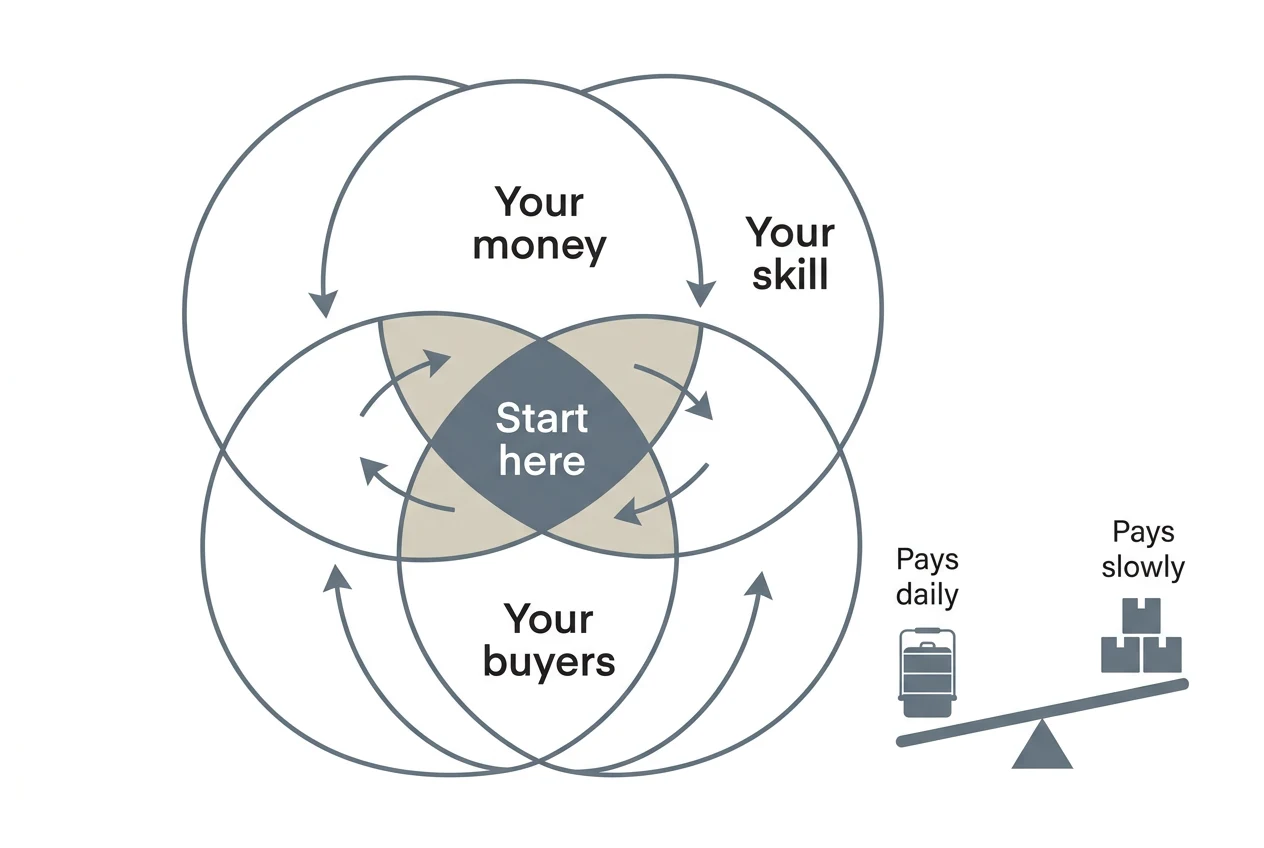
Do not choose the idea that sounds best. Choose the one that matches three things.
- Your money. If you have a small sum, pick a low-budget idea from the table and grow it. Do not borrow for a dream before you have made a first sale.
- Your skill. A cook should not start with repair, and a tailor should not start with decoration. Skills you already have shorten the road.
- Your buyers. You need ten people you can reach within a week. If you cannot name them, change the idea or change the town.
Then check one thing more: does the business return your money fast? A tiffin service pays daily. A shop with heavy stock pays slowly. Neither is wrong, but you should know which one you are in.
How to make your first ₹1 lakh profit in the saree business
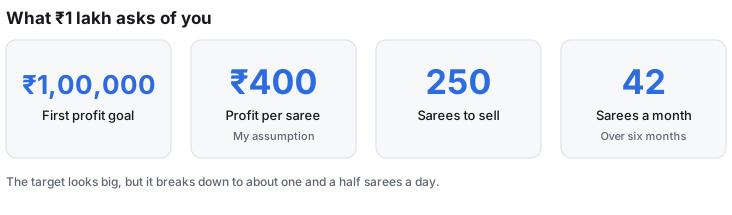
Of the 15, the saree business is the one with the clearest path to a first ₹1 lakh, if you buy well. Here is a model. It is built from assumptions, not from anyone's books, so change every figure to match your own quote.
The assumption: you earn an average profit of ₹400 per saree after your own costs. This is my planning figure, and your real number depends on what you pay and what you charge.
| Line | Working | Result |
|---|---|---|
| Target | First profit goal | ₹1,00,000 |
| Profit per saree | My assumption | ₹400 |
| Sarees to sell | ₹1,00,000 ÷ ₹400 | 250 |
| Over six months | 250 ÷ 6 | About 42 a month |
Selling about 42 sarees a month is about one and a half a day. That is possible for one person with a WhatsApp list, an Instagram page and a few regular customers. Here is how I would get there.
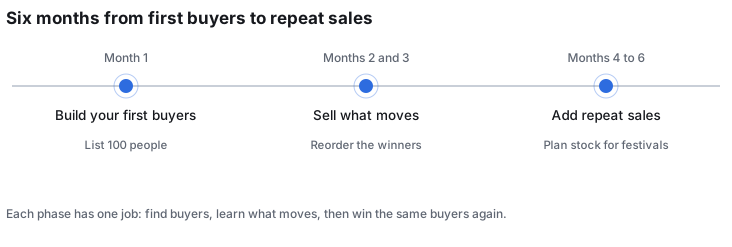
Month 1: build your first buyers
Write down 100 people who might buy: relatives, neighbours, colleagues, friends of friends. Join local women's groups, and tell people what you sell. Photograph each saree in daylight, flat and draped, and put the fabric and price in every message.
Months 2 and 3: sell what moves
Look at which designs sold first. Reorder those, and stop buying designs that nobody asked about. Send a short WhatsApp broadcast every week with three new pieces. Ask each buyer for a photo and one line of feedback.
Months 4 to 6: add repeat sales
Festivals and weddings bring orders at once, so plan your stock six to eight weeks before the season. Offer a matching blouse or a gift pack. Tie up with one or two boutiques that can take a few pieces each. Repeat buyers cost the least to win.
What goes wrong
- Too many designs. Many different sarees, one of each, means none gets a chance. Hold fewer designs in more depth.
- No margin for returns. Count returns and freight in your price.
- Buying for yourself. Stock what your buyers ask for, not what you like.
For a fuller cost breakdown and three budget plans, read How to Start a Saree Business: Cost, Profit & Steps.
How Kenche Mallikarjuna Handlooms helps a reseller
silksaree.shop is the trade name of Kenche Mallikarjuna, a saree house in Rayadurg, on the Andhra Pradesh and Karnataka border. The family has worked in the saree trade for over 100 years. They sell designer silk sarees wholesale to saree shops, boutiques and resellers across India, direct from the maker.
For a reader chasing a first ₹1 lakh, the helpful part is the buying side.
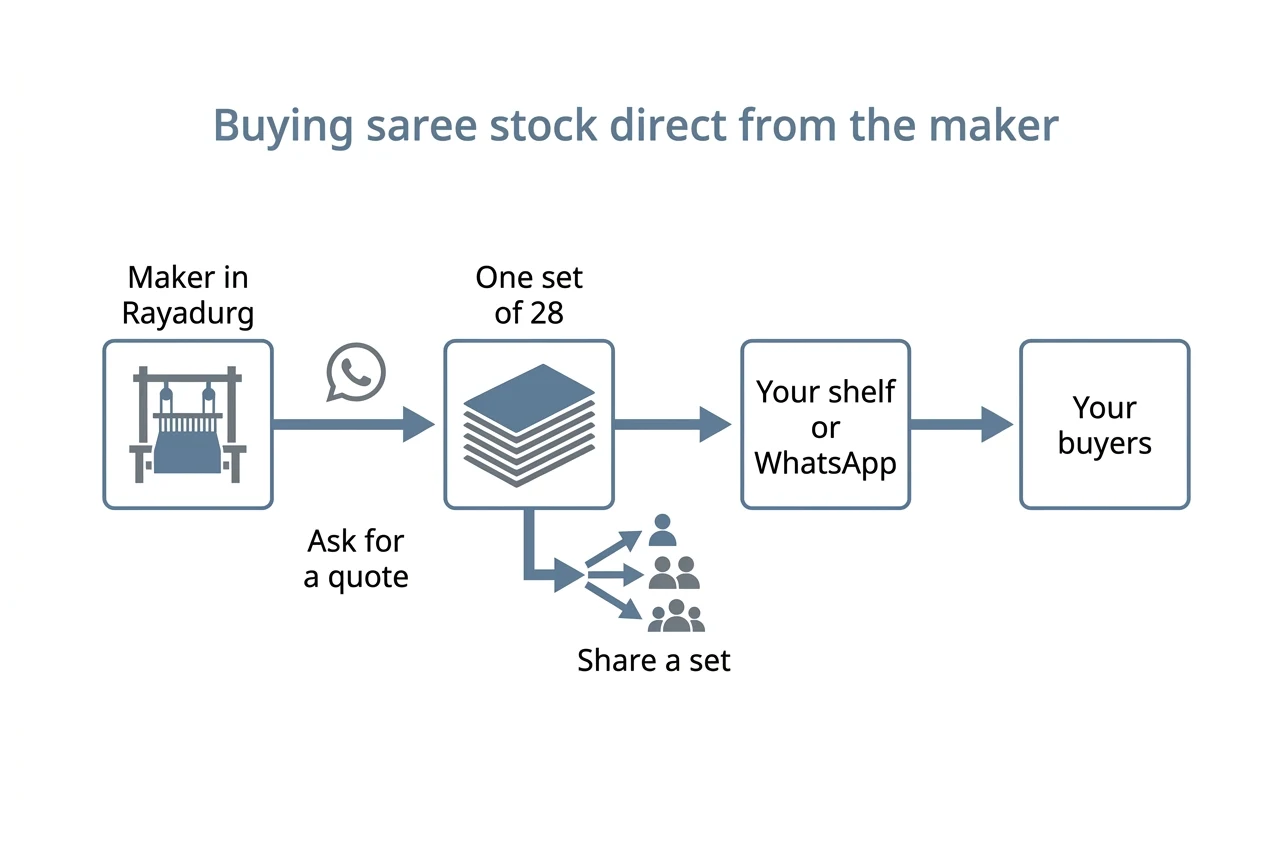
- Factory rates, direct from the maker. You buy from the people who weave the sarees, so your margin is not shared with a middleman. Starting prices are shared on WhatsApp, and Kenche Ramesh replies himself. Ask for a quote and compare it with your other suppliers.
- Sets of 28. Sarees come in boxed sets of 28, and one set is the minimum order. A set gives you depth in a few designs, which answers the "too many designs" mistake above.
- Jacquard consistency. The jacquard weave keeps zari motifs exact from the first saree in a set to the last, so a set looks like a range.
- Your own design. They also weave to order in your colours, border and motif. For a reseller, that means selling something the next shop cannot stock. Ask about quantity and timing on WhatsApp.
- Dispatch anywhere in India. You do not need to live near Rayadurg.
Be clear about the size of the step. A set of 28 is a wholesale order, so it suits you once you have buyers waiting. If you are still at the start, you and two or three others could share one set and split it. That is my suggestion, not an arrangement the supplier offers, so settle it among yourselves first. Most of these sarees are woven on power looms and some on handlooms, so ask which is which before you order. If you want to understand the difference, read Powerloom vs Handloom Silk Sarees: How to Split Your Stock.
How to ask. Message Kenche Ramesh on WhatsApp at +91 94409 21080, or on Instagram at @kencheramesh. Send your town, how many sets you want, and the colours your buyers ask for. He replies with prices, and payment is agreed on WhatsApp.
FAQ
What are the best small business ideas in India for 2026?
The best ones match your money, your skill and the buyers you can reach quickly. For many beginners that means a tiffin service, tutoring, tailoring, freelance work or saree reselling. The table above sorts all 15 by budget and skill.
Which small business needs the least money?
Tuition, freelance design or writing, and social media help for local shops cost the least, because your main input is your time. A phone and a laptop are often enough to begin.
Do I need to register a small business in India?
Registering on Udyam is free and takes only an Aadhaar number to start, according to the official portal. Other licences depend on what you sell. Food, for example, needs food safety registration, and selling on marketplaces usually needs GST. Confirm with your local authority or a CA.
Can I get a loan to start a small business?
The PM MUDRA scheme lends to small businesses without collateral, in bands that run up to ₹20 lakh. Whether you qualify, and for how much, is the lender's decision, so apply with a short plan and a clear idea of your first sales.
Can I really make ₹1 lakh from selling sarees?
It is possible, and the model above shows how: about 250 sarees at ₹400 profit each. The figure is an assumption. Your profit per saree depends on what you pay and what you charge, so get a real quote before you rely on the number.
Is the saree business good for beginners?
Yes, if you start small, hold fewer designs in more depth and plan stock around festivals and weddings. It goes wrong when you buy too many designs or ignore returns.
What to do next
Pick one idea from the table and write down your first ten buyers by name. If that idea is sarees, send Kenche Ramesh a WhatsApp message with your town and the colours your buyers ask for, and compare the quote with at least two other suppliers.