How to Wash Silk Sarees at Home, Dry, Iron and Store Them
19 October 2026 · silksaree.shop · 7 min read
తెలుగులో చదవండిGoogle Translate
In short: To wash silk sarees, use cold water and a mild liquid soap, keep it under five minutes, press the water out, and dry flat in shade. Iron inside out, on low, through a thin cotton cloth.
A hot wash, a hard wring or an hour in the sun can take the sheen off a silk saree for good. None of that is your fault. Nobody hands you instructions with a saree, and every aunt has a different rule, so here is the usual advice in one place, with a note wherever the advice disagrees.
Wash at home or send it to the dry cleaner?
Start here. It decides everything else.
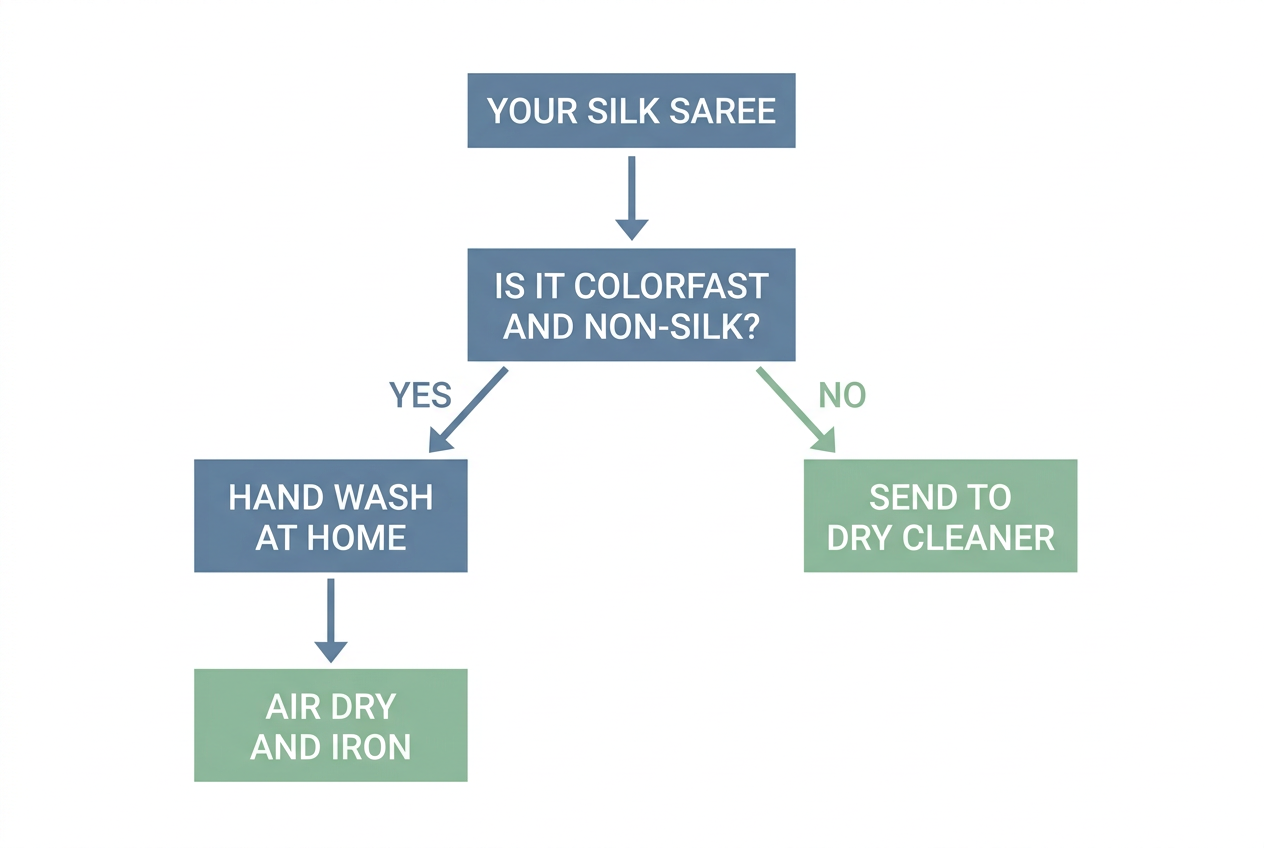
Hand wash at home if the saree is lightly worn and has no heavy zari or embroidery. Zari is the metallic thread in the border and pallu, and it is heaviest on Banarasi silk sarees. Send it to a dry cleaner if any of these is true:
- It is brand new and you have never washed it. Dry clean the first time.
- It has heavy gold zari, like a Kanchipuram, or bridal work. WeaverStory and RMKV both say to hand these to a professional.
- The colour runs in the test below.
- It has an oil or curry stain that blotting did not lift.
Don't wash a silk saree every time you wear it. Air it in the shade for a few hours instead, and spot clean small marks. Every wash is a bit of wear, and silk that is aired and spot cleaned between wears needs far fewer of them.
Do a colour test first
Dark reds, maroons, deep greens and blues are the ones that bleed. Test before you wet the whole saree.
Dab a damp white cloth on a hidden corner, like the end of the pallu that tucks in, and press for a few seconds. If colour comes onto the cloth, stop. That saree needs a professional.
How to wash silk sarees at home, step by step
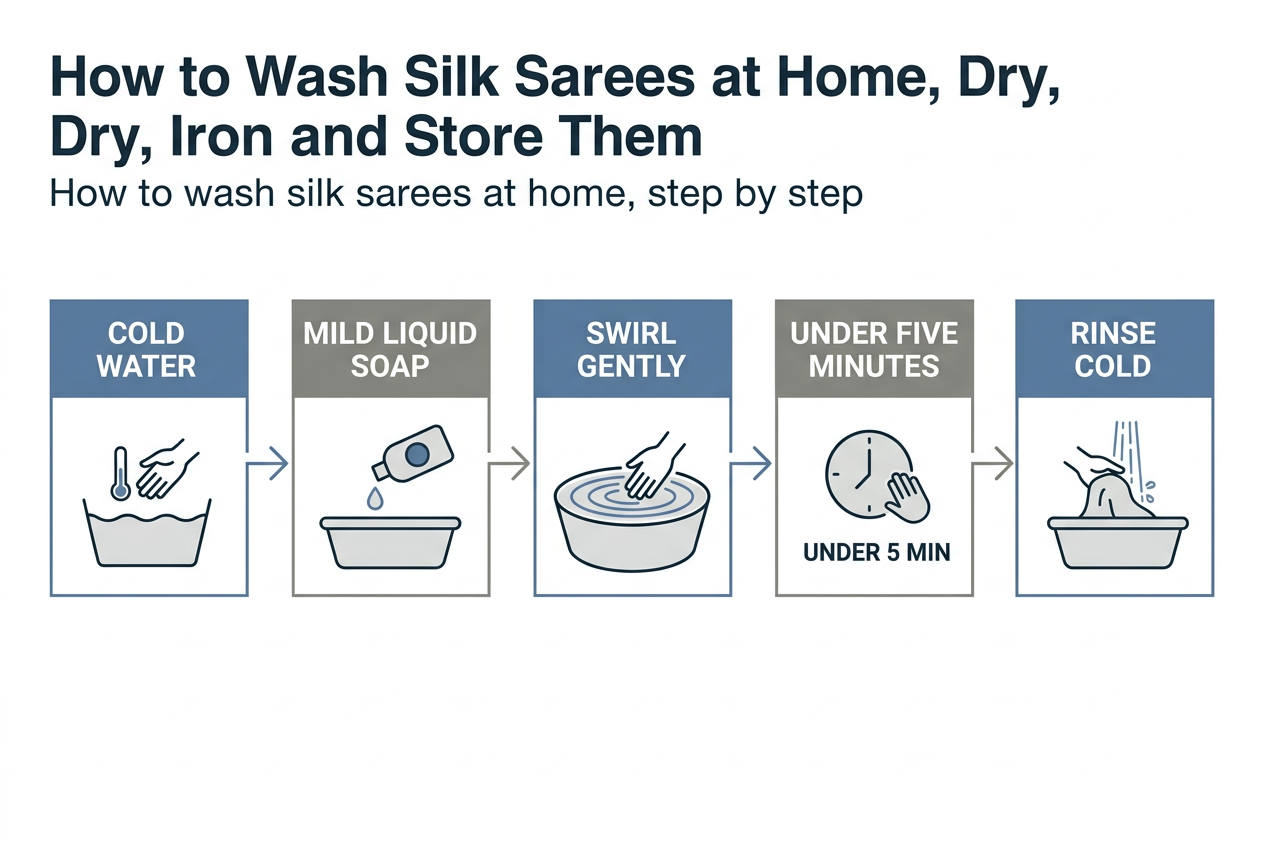
- Fill a clean basin with cold water. Hot or warm water can dull silk.
- Add a little mild liquid soap. A detergent made for silk or wool is best, and baby shampoo works too. Ordinary washing powder is the wrong choice: RMKV calls it "way too aggressive". No bleach, ever.
- Put the saree in and swirl it gently with your hands. Don't rub or twist.
- Keep the whole wash under five minutes. RMKV says five minutes is plenty, and a longer soak risks weakening the silk.
- Rinse in fresh cold water until the soap is gone.
Skip the washing machine. Agitation can harm both the silk and the zari, and although one site does allow a gentle cycle in a mesh bag for some silk, your hands are safer for a saree you want to keep.

What about stains?
Blot at once with a tissue. Don't rub: that spreads the mark and roughs up the threads. RMKV suggests talcum powder on an oily stain. If it doesn't lift, take it to a dry cleaner and show them the spot.
How to dry a silk saree
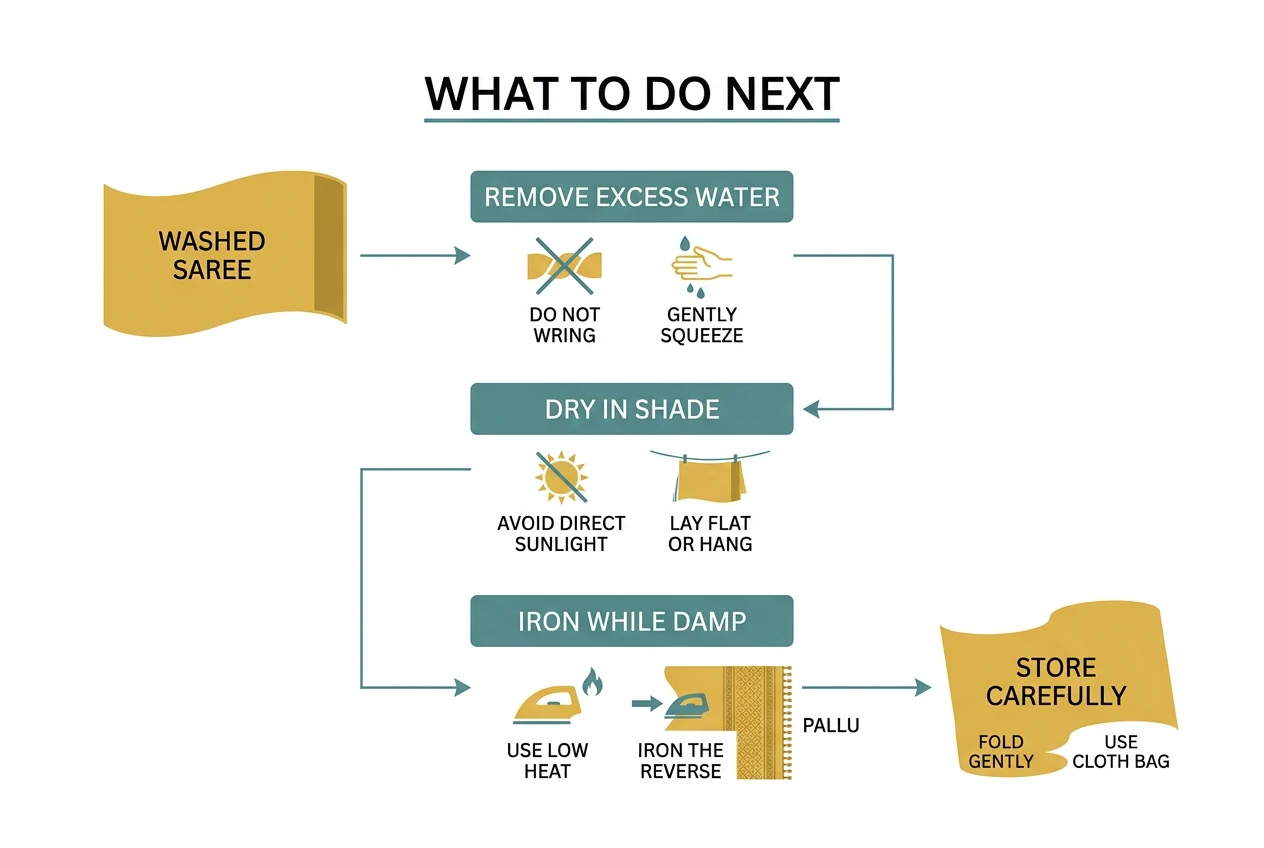
Never wring it. Lay the saree flat on a clean dry towel, roll the towel up and press gently. The towel takes the water; you don't have to.
Then dry it in the shade. Sun fades colour faster than you'd expect and weakens silk over time. Spread it flat on a clean surface, or drape it over a smooth, padded rod in a breezy, shaded spot.
Two small things. No clothes pins, which leave dents that are hard to iron out. And don't hang a dripping saree from one corner, because wet silk stretches and loses its shape.
How to iron a silk saree
Ironing is where the advice splits. Here is what the sources agree on, and what they don't.
They agree on four things:
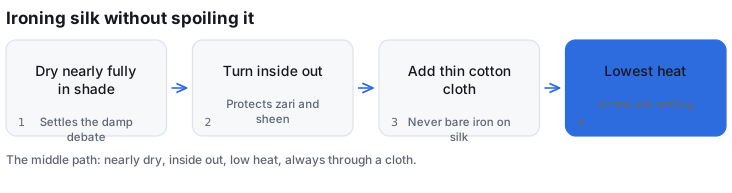
- Use the lowest heat, or the silk setting. Too much heat makes silk dull, pucker or even burn.
- Turn the saree inside out. This protects the zari and keeps the sheen.
- Put a thin, clean cotton or muslin cloth between the iron and the saree. Never touch the silk with a bare hot iron.
- Test a small hidden patch first.
They disagree on damp or dry. Some guides say to iron while the saree is still slightly damp, because the creases come out easily. Others say never iron a damp silk saree. A middle path that works: let it dry nearly all the way in the shade, then iron it on low through the cloth. Don't spray water on dry silk. Water spots can show.

Keep the iron on the zari for as short a time as you can, and never let steam blast a heavy zari border, because heat can crack the metallic thread and moisture can tarnish it. If the pallu is mostly zari, press the plain silk and leave the zari to hang out on its own.
Storing silk sarees
A saree that was washed well can still be spoiled in the cupboard. These points are what the care guides agree on.
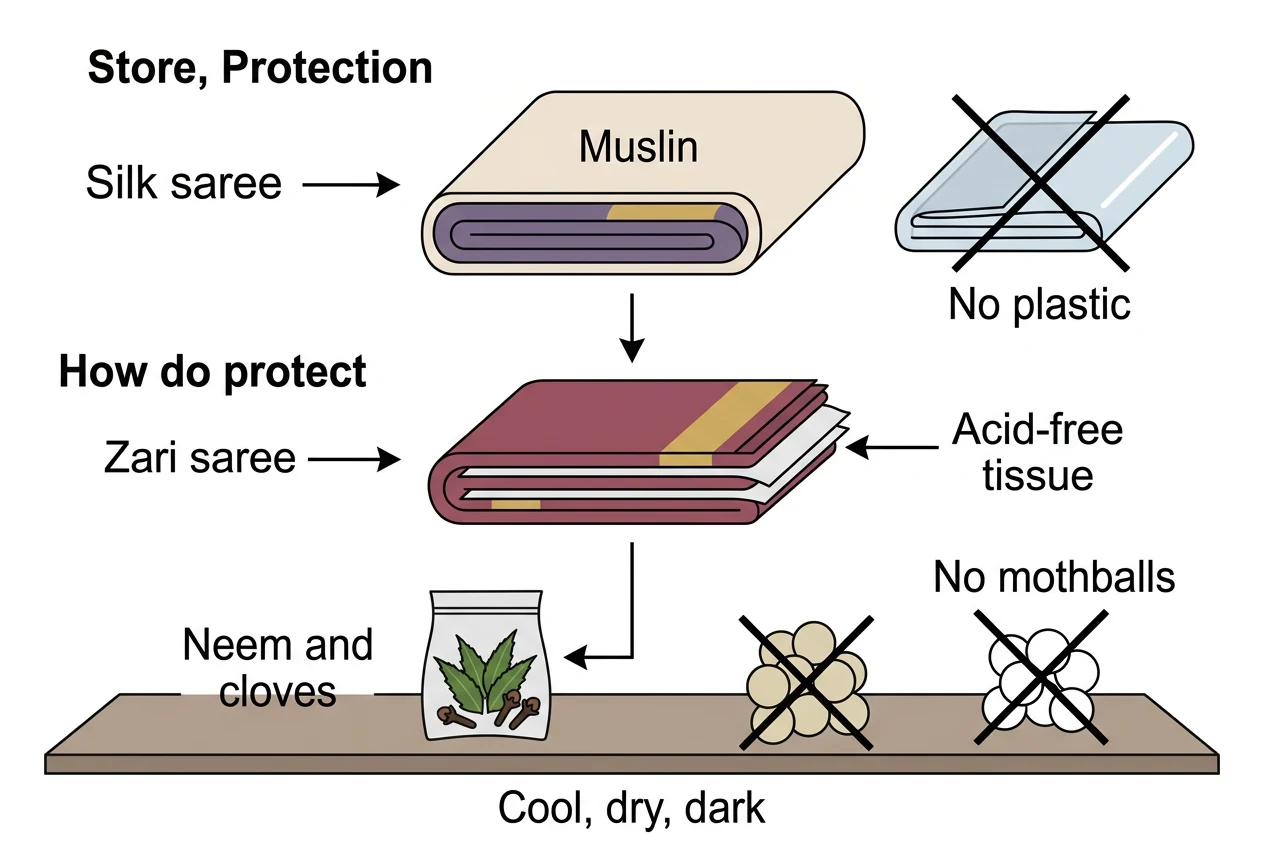
- Wrap each saree in muslin or soft cotton. Muslin lets the silk breathe. A plastic cover traps moisture, and WeaverStory advises against it.
- Clean it before you put it away, since perfume, body oil and sweat left on silk can discolour and weaken it over time.
- Choose a cool, dry, dark shelf with air around it. Not a damp corner, and not an overcrowded wardrobe.
- Refold every three to six months, and fold along new lines each time, so no crease turns permanent. WeaverStory suggests this interval, and other retailers say longer, so treat it as a guide and not a rule.
- For heavy zari sarees, lay acid-free tissue between the folds, as WeaverStory advises for Banarasi and Kanjivaram sarees, and keep pressure off the embellished parts. Newspaper can pass ink onto silk.
- Don't put mothballs next to silk. Use neem leaves, cloves or a cedar block in a small pouch instead.
- Hang a saree only for a short while. Long hanging stretches the fabric and spoils the drape.
Every few months, take them out and check for damp and insects, and for tarnish on the zari. Air them briefly in the shade and put them back.
Quick answers
Can I use shampoo? Baby shampoo is fine. Use a small amount and rinse until the water runs clear.
Hot water to remove a stain? No. Hot water can dull silk, and the guides all say cold.
How often should I wash a silk saree? As little as you can. Air it after wearing, spot clean, and wash only when it needs it.
Can I soak it overnight? No. Silk takes up water fast, and a long soak is how it weakens. Five minutes is the limit.
Why does my zari go black? Moisture and certain chemicals can tarnish it. Keep it dry, wrapped in muslin, and away from mothballs.
What to do next
Pick one saree you wear often and look at its pallu. Is it heavy zari, or plain silk with a light border? That tells you whether it goes in the basin or to the dry cleaner. If you are not sure how your saree was woven, Handloom Sarees: What Makes One Handloom shows how to check the back and the edge.
If you run a saree shop, print this as a short care card and tuck it into the box. Customers remember the shop that told them how to look after the saree. silksaree.shop is a Rayadurg saree house that sells to shops in sets of 28. A note like this costs nothing to add.
Our sources were retailer and laundry-brand guides, not a conservation lab. So treat the details, like refold timing and the damp-ironing question, as sound practice and not settled science.