
Accounting for Small Business in India: Records & Filing
15 October 2026 · silksaree.shop · 8 min read
తెలుగులో చదవండిGoogle Translate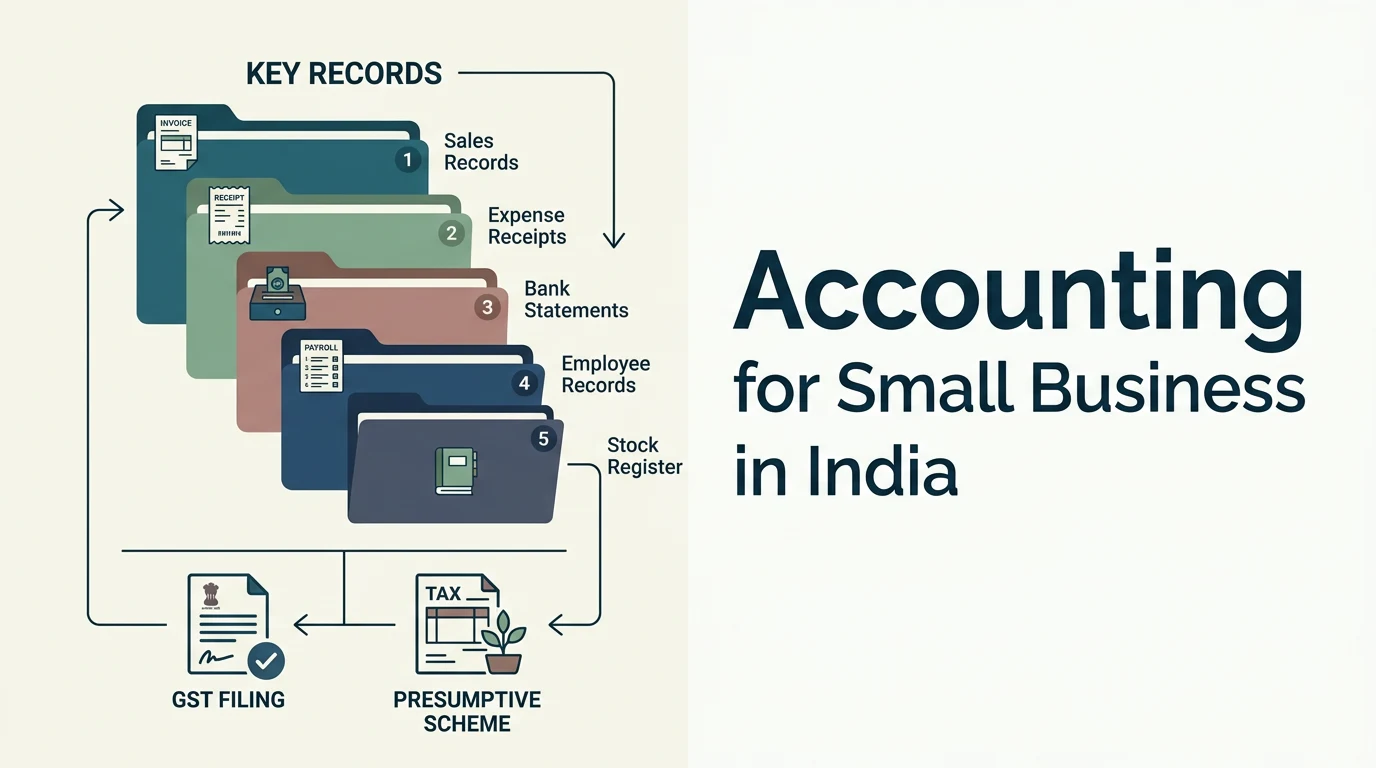
In short: Accounting for small business in India means five simple records, a separate business bank account, and on-time GST and income tax filing. The presumptive scheme can shrink the paperwork.
Accounting for small business is mostly a habit. Write down every rupee that comes in and goes out, keep the bill for it, and keep your own money apart from the shop's. Everything else in this post sits on top of that.
Nobody's born knowing this. Most shop owners start with a cash drawer and a memory, and that works right up until the first GST notice, the first loan form, or the first month when sales look fine and the bank balance doesn't. This post is for that moment. It covers what to record, when GST begins, what the income tax rules ask of you, and how long to hold on to your papers. It is a guide, not tax advice. A chartered accountant (CA) should check anything that touches your own filing.
Last updated: 16 October 2026. Written by: the silksaree.shop team.
What your books have to do
Books do three jobs. They tell you whether the business made money. They let you file tax without guessing. And they are the proof a bank asks for when you apply for a loan. Not sure whether a scheme or a bank suits you? That's a separate question, but both want clean statements.
Only the second job is the law's business. The first and third are yours, and they are the reason to keep better books than the law demands.
Accounting for small business: the five records worth keeping
You don't need accounting training for these. A notebook will do. So will a spreadsheet or a free app, plus ten minutes a week.
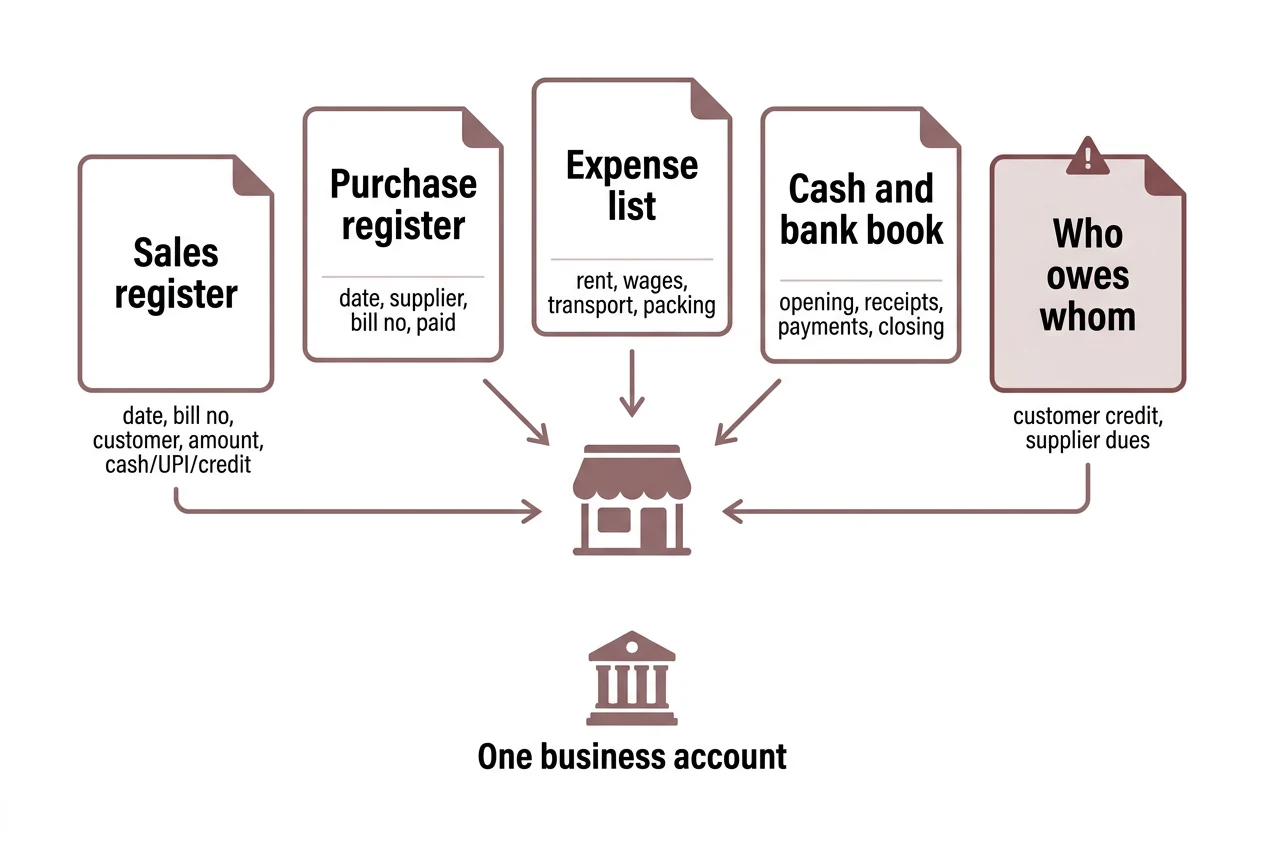
- A sales register. Date, bill number, customer, amount, and whether it was cash, UPI or credit. Every sale, even the small ones.
- A purchase register. Date, supplier, bill number, amount, and what you paid against it. For a reseller this is the stock you buy.
- An expense list. Rent, wages, transport, packing, electricity, phone. One line each, with the bill kept.
- A cash and bank book. The opening balance, every receipt and payment, the closing balance. Match it to your bank statement once a month.
- A list of who owes you and whom you owe. Credit given to customers, and dues to suppliers. This is the one that quietly breaks small shops.
Two habits matter more than the format. Open a separate current or savings account for the business and put every business rupee through it. And never throw away a bill. When personal and shop money share one account, a lender or an officer has no way to tell what the business really earned, and that's easy to avoid on day one, so avoid it.
Start with a bank account and a sheet. Software can come second, once the habit is there. A tool cannot tidy a record you never made.
Cash or accrual?
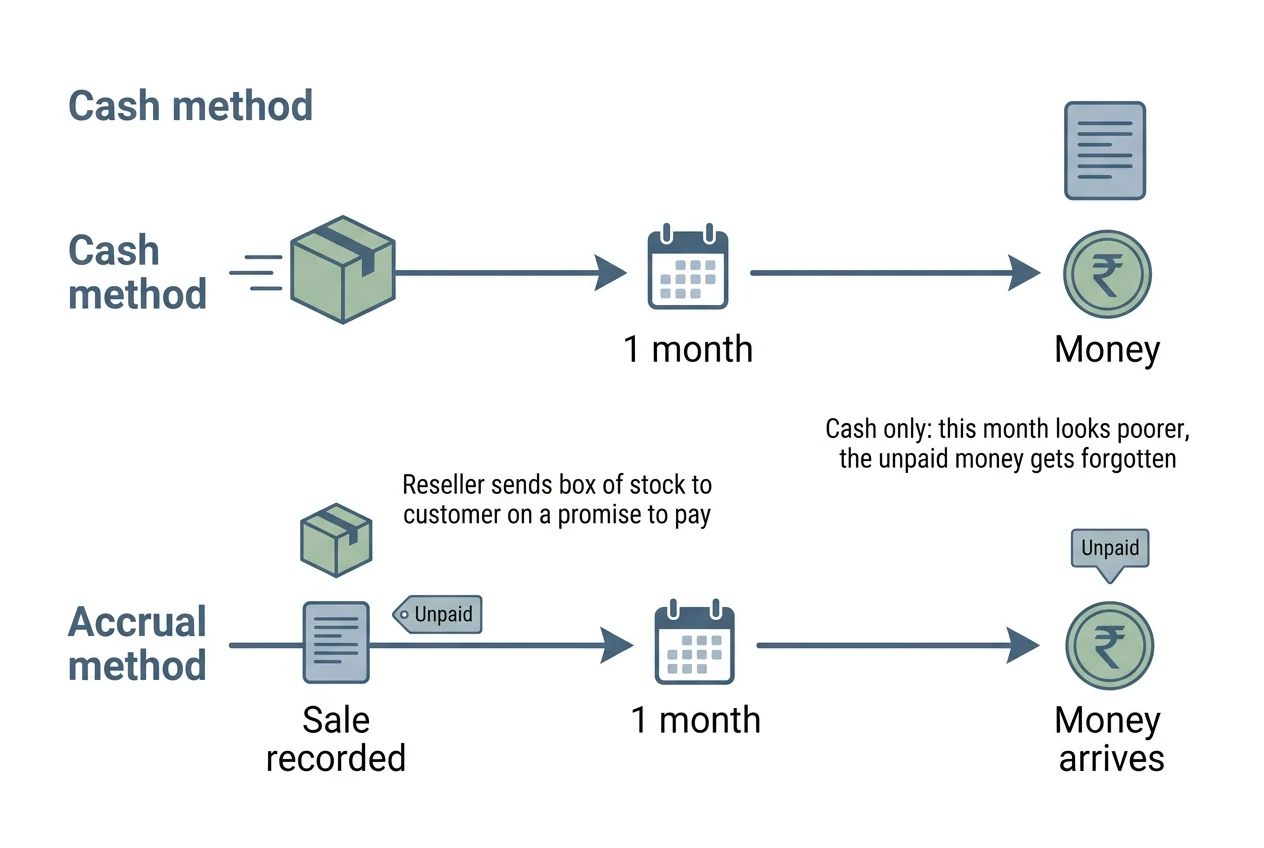
Cash accounting records a sale when the money arrives. Accrual accounting records it when the sale is made, even if the customer pays next month. A small shop selling mostly for cash and UPI can run on the cash method without harm.
The moment you sell on credit or buy stock on credit, add the list of dues from the section above. You are then halfway to accrual books without calling it that. A reseller who sends a box of stock on a promise to pay has made a sale and has not yet been paid. That's the usual position of a wholesaler, and retail vs wholesale explains why it changes how a shop has to track its money. If the books show only cash received, that month looks poorer than it was, and the unpaid money gets forgotten.
When GST enters your books
GST registration is not optional above certain turnover. One 2026 guide lists ₹40 lakh a year for a business supplying only goods, ₹20 lakh for services, and lower limits in some special-category states. The same guide notes that some categories of business must register whatever their turnover. Check your own case on the GST portal or with a CA, because the rules depend on what you sell and where.
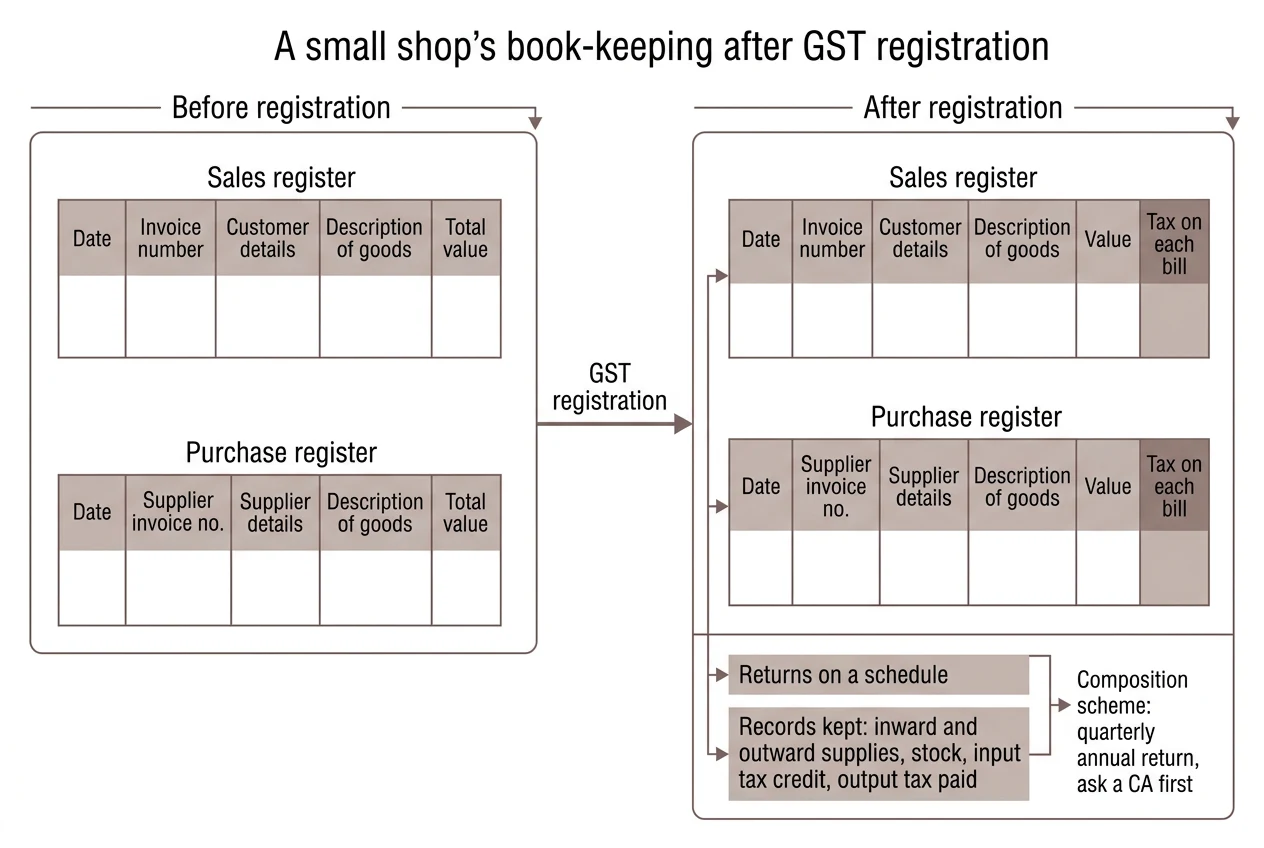
Once you are registered, your records change in two ways. Your sales and purchase registers must show the tax on each bill, and you file returns on a schedule. You also have to keep specific records: one GST explainer lists inward and outward supplies, stock, input tax credit availed and output tax paid.
There is also a composition scheme for smaller traders. iPleaders' guide puts its limit at ₹1.5 crore of turnover for manufacturers and traders, and ₹75 lakh in special-category states. It has its own quarterly payment and an annual return. It also has conditions, so ask a CA before you opt in rather than after.
Income tax: how much do you have to record?
This is where the choice you make changes how much paperwork you carry.
Under the presumptive scheme, you declare a fixed share of turnover as your profit and skip the line-by-line cost accounting for tax purposes. The scheme was section 44AD of the Income Tax Act, 1961. TaxGuru's comparison says the new Income-tax Act, 2025 carries it into section 58, in force from 1 April 2026, with the same figures:
- Turnover up to ₹2 crore, or up to ₹3 crore if cash receipts are 5% or less of the total.
- Profit declared at 6% of turnover received through banking or online channels, and 8% of the rest.
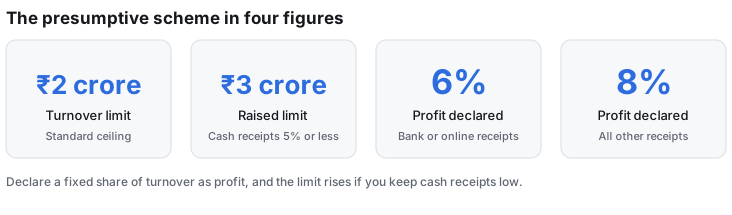
An illustration. A shop with ₹50 lakh of turnover, all of it by bank or UPI, would declare 6%, which is ₹3 lakh. If half the turnover were in cash, the cash half would be taxed at 8% and the digital half at 6%, so the declared figure would land between ₹3 lakh and ₹4 lakh. That's arithmetic, not a forecast of your tax bill. Your actual tax depends on your other income and your slab, and a CA can run it for you in minutes once the registers are clean enough to read, which is the whole argument for keeping them.
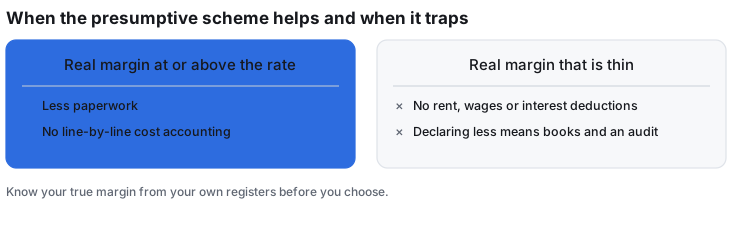
Two catches. First, you cannot also claim deductions such as rent, wages or interest against that declared profit. Second, if you declare less than the fixed share and your income is above the basic exemption limit, the same source says you need to keep books and get an audit. So the scheme is a good deal for a business whose real margin is at or above the rate, and a trap for one whose real margin is thin. Work out your true margin from your own registers before you pick it.
Outside the scheme, a tax audit applies once turnover passes ₹1 crore. The Income Tax Department's own FAQ, as summarised in search results, raises that to ₹10 crore if cash receipts and payments stay within 5% of the total. I could not open that page, so check the limit on incometaxindia.gov.in before you rely on it. Whichever way you file, the five records above are what a CA turns into your return.
How long to keep your papers
Under GST, the explainer above says records must be kept for 72 months from the due date of the annual return for that year. If there is an appeal or other proceeding, you keep them for one year after it ends, or for the 72 months, whichever is later. That is six years, so keep a folder per financial year and do not clear it out.
For income tax, I did not confirm a single retention period from an official source. Ask your CA, and until then treat the GST period as your floor.
A routine that fits in an hour
- Daily: enter the day's sales and expenses, and file the bills.
- Weekly: update the list of dues, and chase what is late.
- Monthly: match the cash and bank book to the bank statement, and close the month with a profit or loss figure.
- Every quarter or year: hand the registers to your CA, pay what is due, and file.
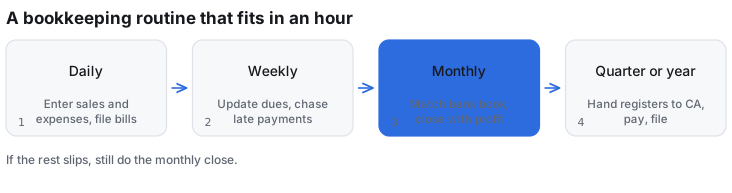
Do the monthly step even if the rest slips. A month closed with a real profit number tells you whether the shop is working. For a reseller who buys stock ahead of a season, it also tells you how much cash is left to buy the next lot. If you are still planning the business, how to start a saree business works through three budgets that make a good first set of books to practise on.
When to bring in a CA
Hire help when GST registration is due, when you're choosing between the presumptive scheme and full books, and when a notice arrives. Don't wait for the notice. Many small shops use a CA only for the yearly filing and keep the daily books themselves, which is a sensible split.
The books will not do the work for you. They give you something to stand on: a profit figure you believe, bills you can show, and a business that a bank can read.