
Retail vs Wholesale: What a Saree Shop Owner Needs to Know
14 October 2026 · silksaree.shop · 6 min read
తెలుగులో చదవండిGoogle Translate
In short: Retail vs wholesale comes down to who buys. Retail sells single sarees to the person who will wear them. Wholesale sells boxes to shops that resell. A new saree shop buys wholesale and sells retail.
If you're opening a saree shop, you'll hear both words from every supplier and every cousin with an opinion. They sound like two different businesses. They aren't. They're two ends of one chain, and you stand in the middle of it. So which end are you on, and what does that change when you place an order?
What retail and wholesale each mean
Retail is selling to the final user. A woman walks in, picks one saree for a wedding or a festival, and pays for that one piece. You see her face and answer her questions. You sell at the full price you put on the tag.
Wholesale is selling to someone who will sell it again: a shop, a boutique, a reseller. They take many pieces at once, so the price per piece is lower, and the seller often sets a minimum order. Salesforce's guide to the two models puts the trade-off in one line: margins are lower per unit, but the volume makes up for it.
The same saree can be a wholesale item on Monday, when a shop buys it in a box. By Saturday it's a retail item, carried out by a customer.
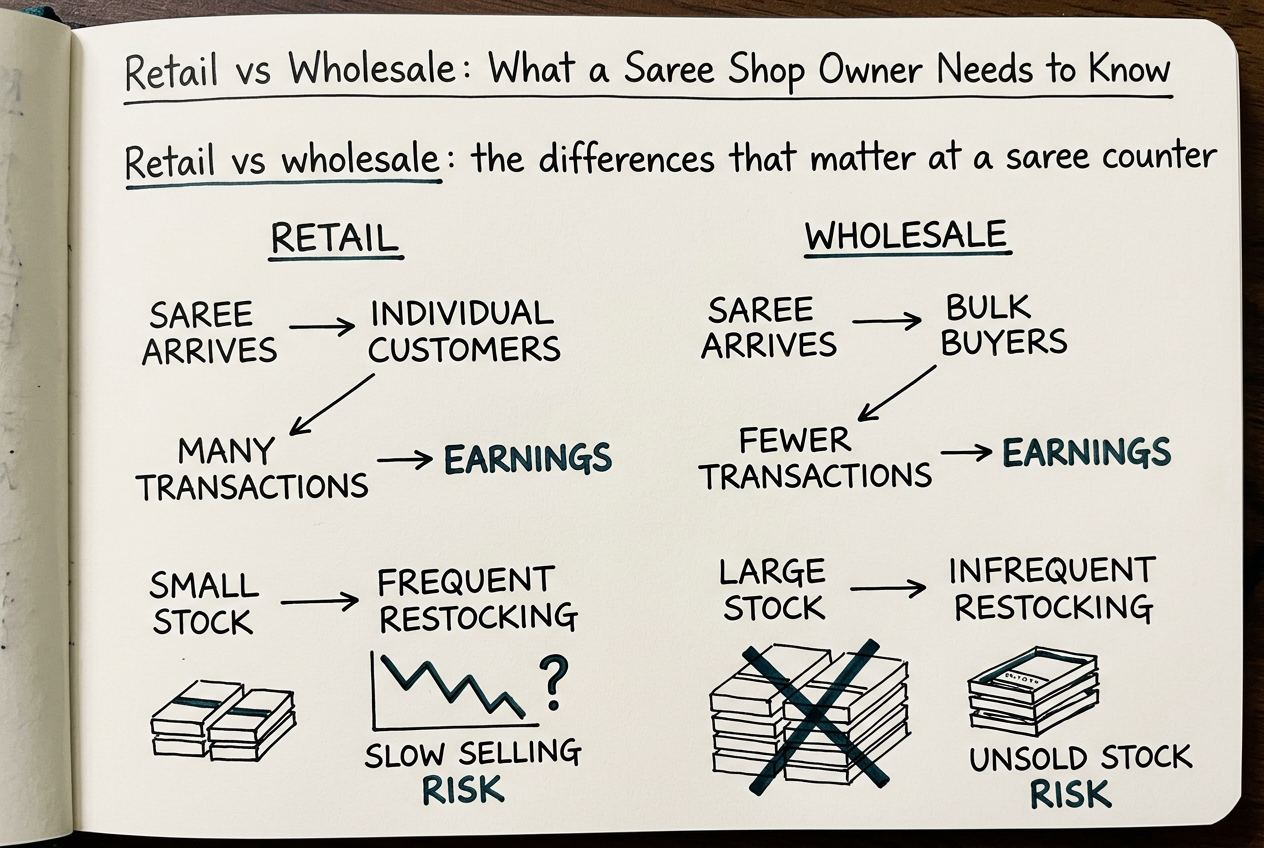
Retail vs wholesale: the differences that matter at a saree counter
Here's how the two compare on the things a shop owner feels day to day.
Retail buyers are single customers. Wholesale buyers are other businesses. A retail customer takes one saree, maybe two, while a wholesale buyer takes a set or several. Retail is the full tag price. Wholesale is lower per piece, because the seller moves many at once. Wholesale usually has a minimum order. Retail has none.
The work looks different too. Retail is a shop, a counter, a display and a conversation with every customer. Wholesale is mostly behind the scenes: orders, packing, dispatch, and the same few buyers again and again.
Margin is the one people misread. Retail earns more on each saree sold, but you wait for people to walk in, and the shop pays rent and staff whether or not a customer comes in that day. Wholesale looks thin per piece. There's no counter to keep open, though, and the whole game is moving a lot of them. Neither one is better in general. They're different ways of earning, with different risks.
Where a new shop owner sits in the chain
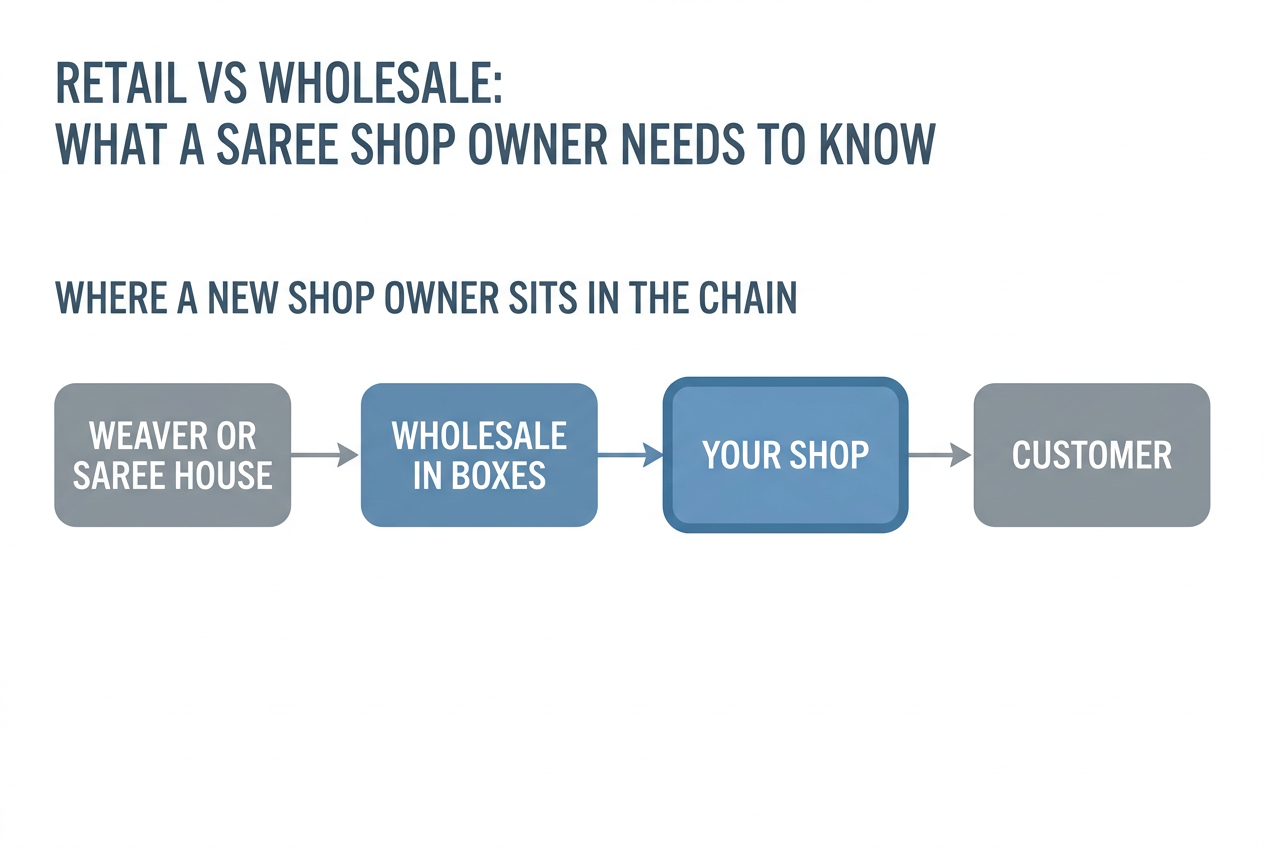
A shop owner is on the middle step, and it helps to see the whole chain once.
- A weaver or a saree house makes the cloth on a loom.
- That maker, or a trader, sells it wholesale in boxes.
- Your shop buys the box wholesale.
- You sell the sarees one at a time, at retail, to customers.
You do both. You're a wholesale buyer and a retail seller. The price you pay is the wholesale price, the price on your tag is the retail price, and the gap between them pays for your shop and, if things go well, your own living.
Buying direct from a maker shortens the chain. Fewer hands between the loom and your shelf means fewer places where the price goes up. silksaree.shop is a Rayadurg saree house that sells to shops this way, in boxed sets of 28, so a shop can fill its shelves with one order. Rates are shared on WhatsApp, not on the site.
What buying wholesale asks of you
Wholesale buying isn't like picking one saree for yourself, and a first order catches many people out. These are general points, not rules from any one supplier.
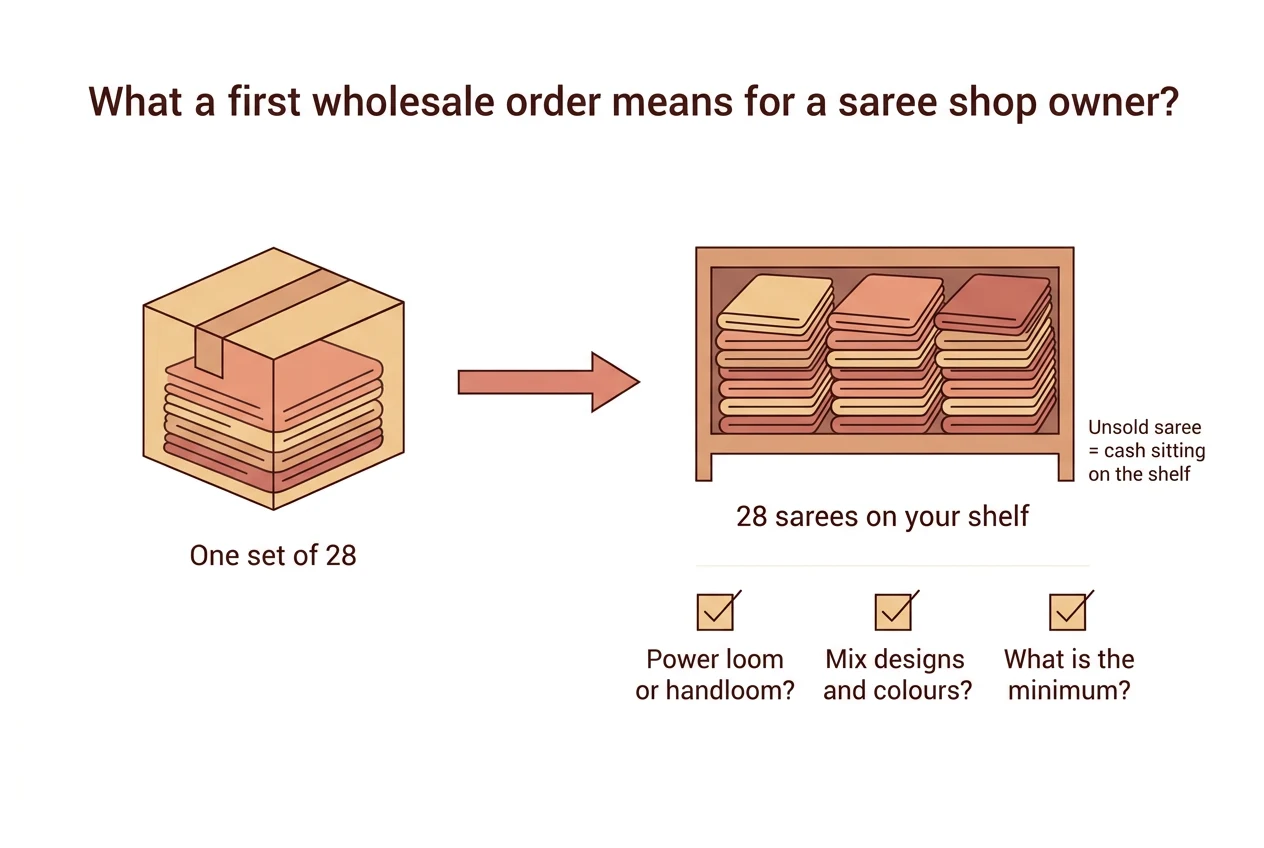
You buy a set, not a saree. At a house like silksaree.shop one set of 28 is the smallest order, so a first purchase puts 28 sarees on your shelf at once, and you should work out how many you can display and sell in a season before you say yes. Until a saree sells, your money is sitting on a shelf. A bigger order brings a lower price per piece, but it holds more of your cash too.
Check the set before you commit. Ask whether the sarees are power loom or handloom, whether designs and colours can be mixed in a box, and what the minimum is. Don't assume. The powerloom vs handloom stock guide shows what to ask and how to look at the cloth, and Handloom Sarees: What Makes One Handloom, and How to Buy explains the word itself.
Selling goods usually brings registration rules, and they change, so ask a chartered accountant rather than trusting a blog, this one included.
Should you do retail, wholesale or both?
It depends on what you have and what you want.
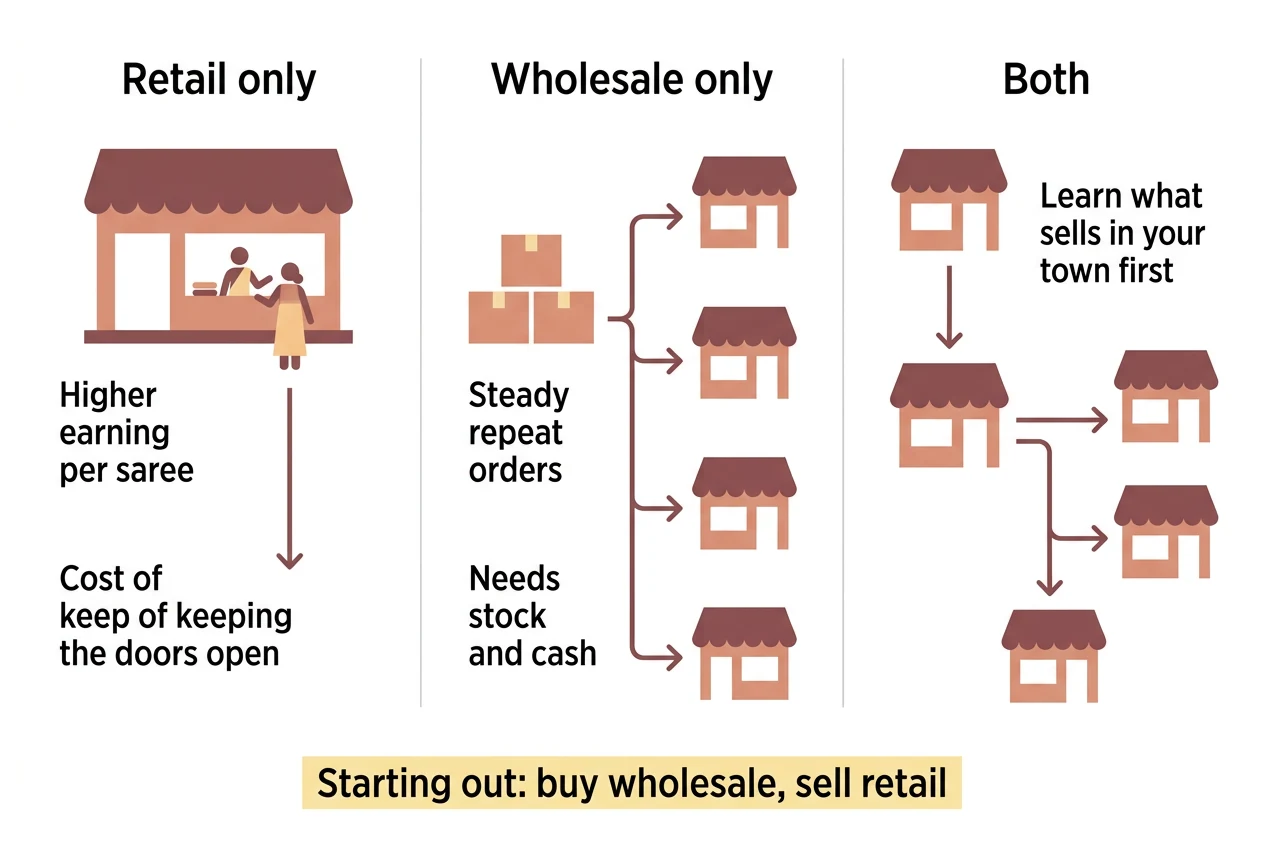
Retail only suits you if you want a shop, enjoy talking to customers and have a spot with footfall. You'll earn more per saree. You also carry the cost of keeping the doors open.
Wholesale only suits you if you can supply other shops, have the stock and the cash to hold it, and prefer steady repeat orders to single sales. It works best once you have a source you trust.
Both is what many shops end up doing: they start as a small retailer, learn which sarees sell in their town, and later supply a few nearby shops once they have the stock and the cash to do it. That's a common path, not a rule, and nothing here is a figure from a study.
If you're starting out, take the simplest plan: buy wholesale, sell retail, and learn your customers before you take on a second business. For the money side, see How to Start a Saree Business: Cost, Profit & Steps (2026).
What to do next
Write down two things before you speak to any supplier. How many sarees can you honestly display and sell in a season? And how much cash can you leave sitting in stock? Those two answers tell you what size of order is safe.
Then ask the supplier what's in a set, what the minimum is, and how orders are placed. A good wholesale supplier answers in a line or two. Want to see how a saree house answers? Message silksaree.shop on WhatsApp and ask.