
Small Business Marketing Ideas for a Saree Shop
16 October 2026 · silksaree.shop · 6 min read
తెలుగులో చదవండిGoogle Translate
In short: The best small business marketing ideas for a saree shop cost little: a full Google listing, a WhatsApp catalog, photos of real stock, festival timing and happy customers. Pick two and do them well for a season.
You've got a shop, a shelf of sarees and a small budget. Everyone says "do marketing", and the advice jumps from reels to billboards to agencies. So what should a small shop do first? This post is for one kind of owner: a few hundred square feet, a phone, no marketing team.
Start with where customers already look
Check what a stranger sees when they search for you. Most people looking for a saree shop in a town type the name, or "saree shop near me", and read whatever comes up.
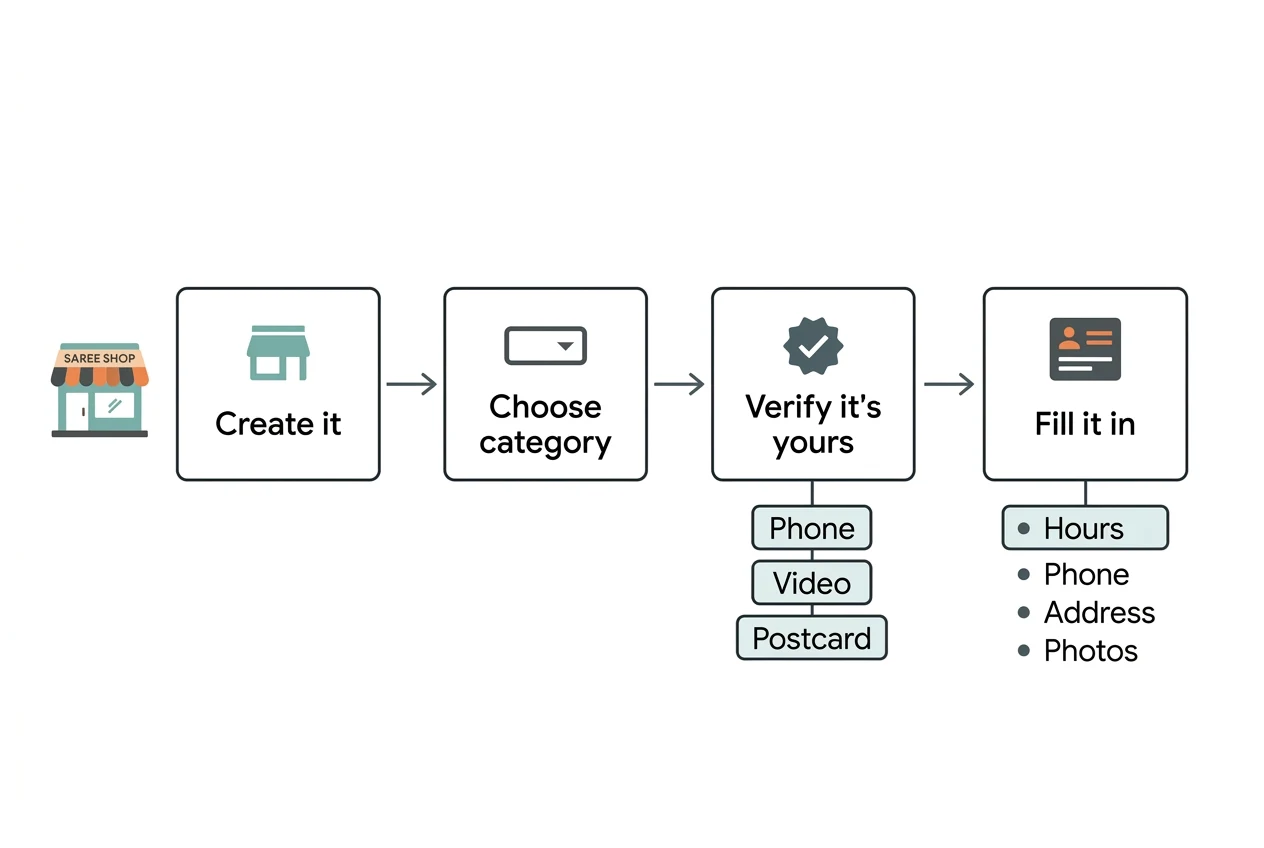
Google lets a shop list itself for free through a Business Profile, which controls how you appear in Search and Maps. Guides to the profile all describe the same steps: create it, choose the right category, verify that the shop is yours, then fill it in. Verification is by phone, video or postcard, depending on what Google offers you. It can take a while, so start it first.
Then fill it in properly. Real hours, and a phone number that gets answered. The address too. Add photos of the shopfront and the shelves, plus a few sarees laid flat in good light. A listing with photos looks like a shop that exists. A bare one looks abandoned.
Make WhatsApp your counter
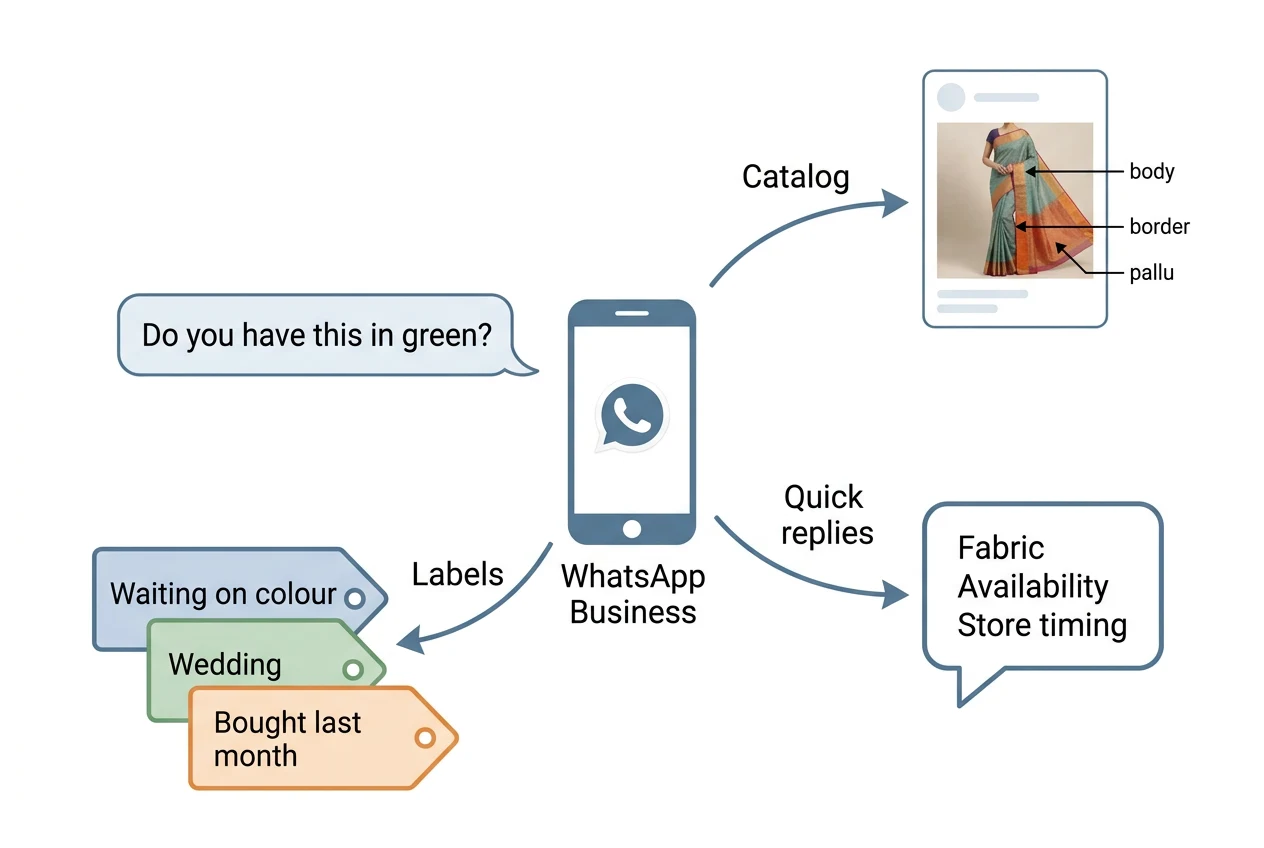
For many small shops in India, WhatsApp is already where the sale happens. A customer sends a photo: "Do you have this in green?" That chat is part of your shop. Treat it that way.
The free WhatsApp Business app has tools built for this. Vendor guides to its features list a business profile, a product catalog, quick replies for the questions you answer ten times a day, and labels to sort chats. Check WhatsApp's own help pages for current limits, because they change.
Three habits matter more than the tools:
- Put your best stock in the catalog. Photograph each saree against a plain wall in daylight. Show the body of the saree, then the border and the pallu.
- Save the answers you repeat. Fabric, and whether it's power loom or handloom. What's available. Store timing. A quick reply saves typing and keeps the answer the same every time.
- Label your chats. Mark who's waiting on a colour or asked about a wedding, and who bought last month. Then you know whom to message when the right saree arrives.
Broadcast lists send one message to many people, but they only reach people who have saved your number. Use them for real news, like a new set on the shelf. Not daily nagging. People leave lists that spam them.
Small business marketing ideas that fit the saree calendar
A saree shop doesn't sell evenly through the year. Weddings, festivals and family functions pull demand into bursts, so your marketing should follow that rhythm instead of running at one volume all year.
A simple way to plan it:
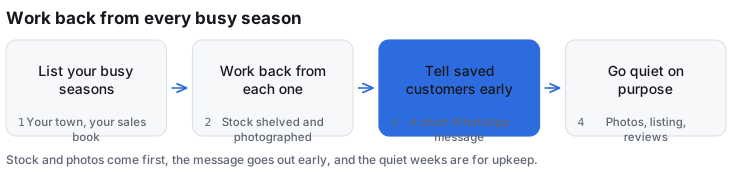
- Write down your busy seasons for your own town. You know them better than any blog does.
- Work back from each one. New stock should be on your shelf and photographed before customers start asking, not after.
- Tell people early. A short WhatsApp message to your saved customers, "New silk sarees have arrived for the season, send a message to see photos", does more than a poster put up after the rush has already started.
- Go quiet on purpose between seasons. Photograph stock, fix the listing, ask for reviews.
This is general guidance, not data. Your own sales book will show which weeks matter in your town.
Show the cloth, not just the saree
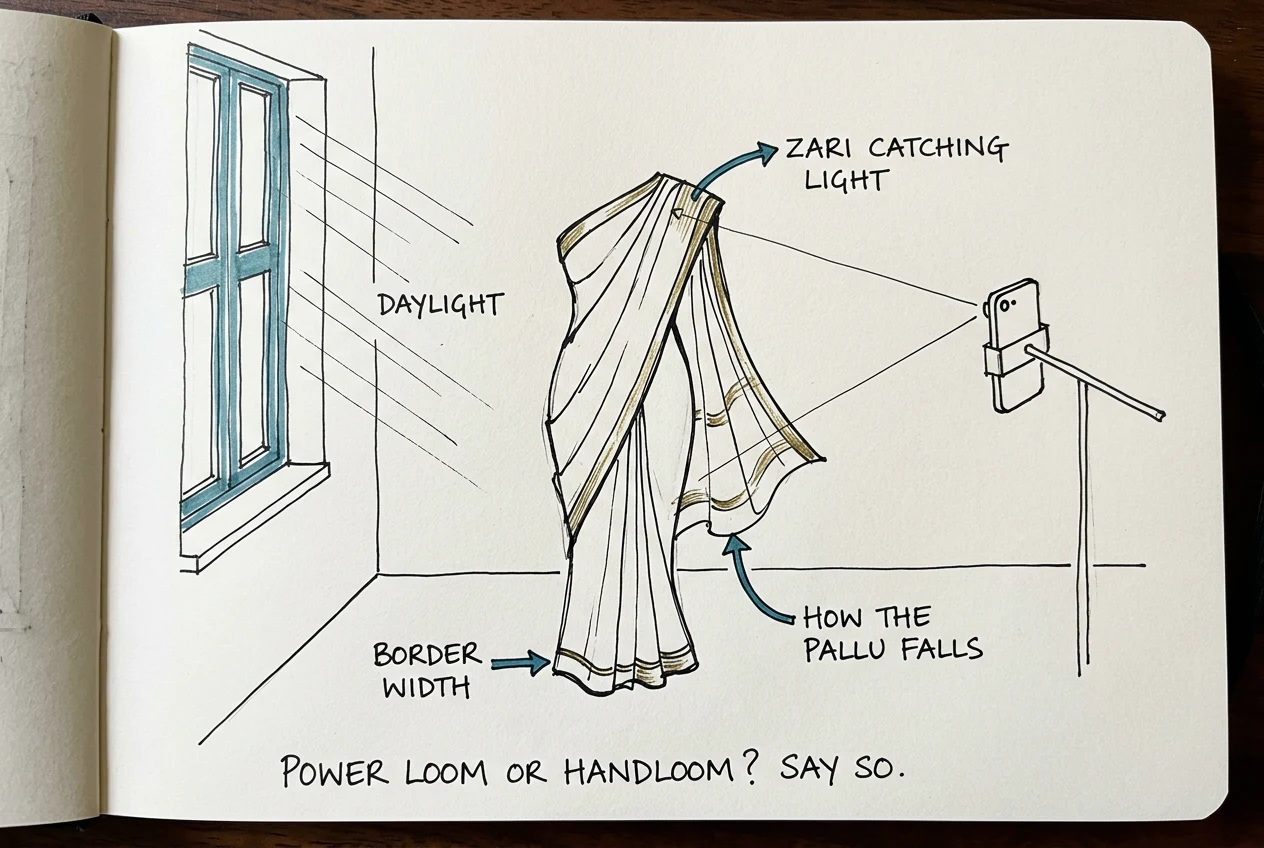
Nobody can touch your sarees on a phone. The photo has to do the work of a hand on the fabric. So take pictures that answer what people ask at the counter: how the zari catches light, and how wide the border is. How the pallu falls.
A short video of someone draping the saree and turning it in the light often says more than ten photos. You don't need a studio. A window, a plain wall and a steady hand are enough.
Be honest in the words that go with the picture. Power loom? Say so. Handloom? Say that. The powerloom vs handloom stock guide shows how to tell them apart. Handloom Sarees: What Makes One Handloom, and How to Buy explains why the word matters, and a buyer who feels misled once rarely comes back and tells friends exactly why.
Ask for reviews, and answer them
A review is a stranger vouching for you in public. On Google, reviews are widely treated as one of the signals behind local results, and your reply is visible to the next person reading.
Asking is allowed. Paying for reviews isn't, and neither is writing your own, or asking only the people you expect to be happy. Those are against Google's policy, as local-search guides commonly note. Check Google's current policy before you set up any routine.
The easiest time to ask is right after a good sale, while the customer is still smiling at the mirror. Say it in plain words: "If you liked the saree, would you leave a line on Google? It helps other families find us." Then reply to every review, the good ones and the sour ones, calmly and in your own voice.
Let your own customers do the marketing
Word of mouth was the first marketing and it still works. A woman who buys a saree for a family wedding is seen by everyone at that wedding. If she's happy, the next question at the function is, "Where did you get it?"
You can help that along without gimmicks:
- Pack each saree neatly, with your shop name and phone number on the cover.
- Remember what she bought and for which occasion. Next season, message her first.
- Be easy to ask. Answer on WhatsApp the same day, even if the answer is "I will check and tell you by evening".
Service is marketing. The shop that replies fast, keeps its word and remembers the customer gets recommended without spending on an advert.
Stock is part of the marketing too
Good marketing can't rescue a shelf that doesn't match your customers. If the same few colours keep selling, order more of those. If sarees sit untouched, stop buying that kind. Keep a notebook of what sold and what was asked for and not found.
When you buy wholesale, that notebook decides what goes into your next set. Retail vs Wholesale: What a Saree Shop Owner Needs to Know covers how the buying side works, and How to Start a Saree Business: Cost, Profit & Steps (2026) covers the wider plan. A shop that stocks what its town asks for needs far less advertising.
What to do this week
Don't try everything at once. Pick two ideas and finish them.
- Start the Google Business Profile verification, or complete the listing you already have.
- Set up the WhatsApp Business catalog with your twenty best sarees, photographed in daylight.
Next month, add the review habit. After the next festival, open your sales book and see what moved. Marketing for a small shop is a handful of simple things done steadily, and you can start the first one today.