
What Is Wholesale? Meaning, Payments and Strategy for Shops
16 October 2026 · silksaree.shop · 5 min read
తెలుగులో చదవండిGoogle Translate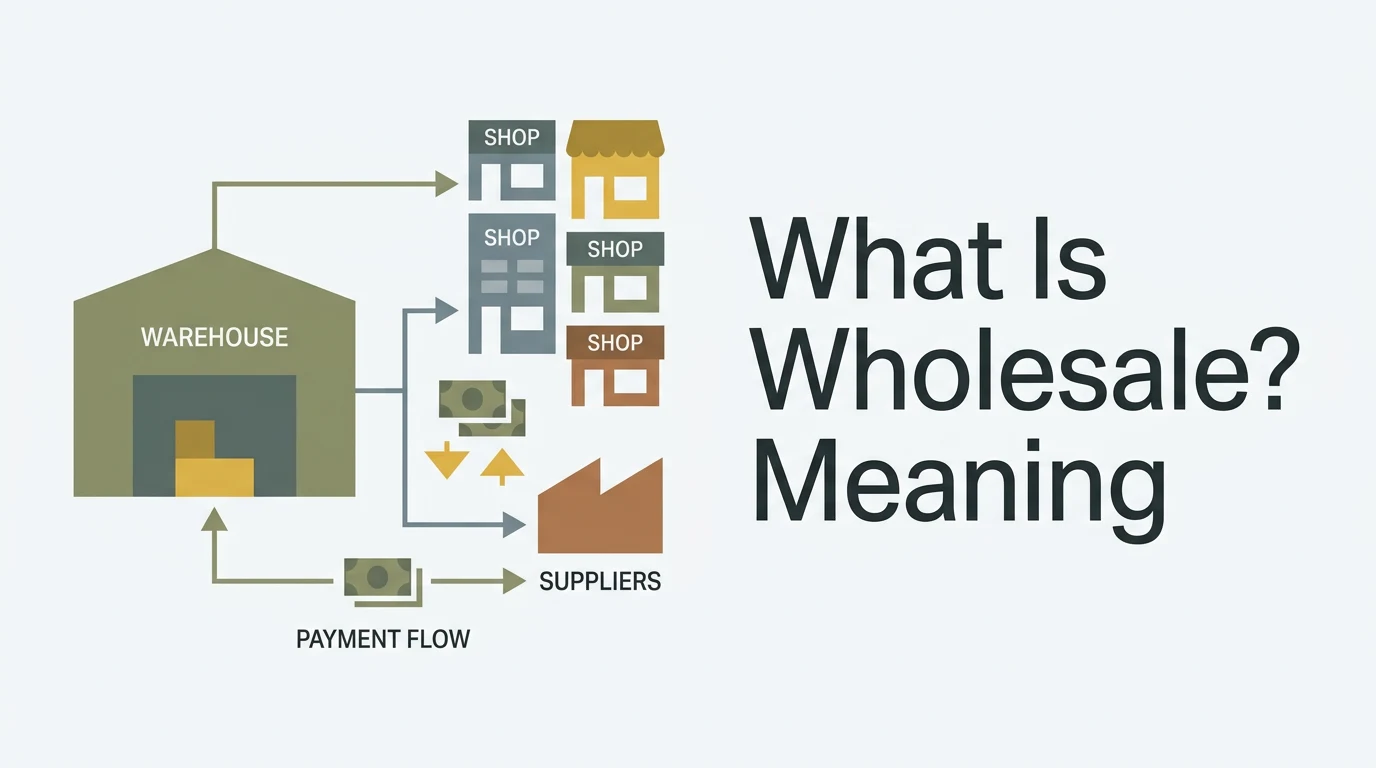
In short: Wholesale is selling in bulk to a business that will sell the goods again. The price per piece is lower and the order is bigger. Payment has its own rules.
What is wholesale? Selling in bulk to shops and resellers instead of to the customer who walks in. Every supplier uses the word, and it means more than one thing. This post sorts out the meaning, the two kinds of "wholesale payments", and a few habits worth keeping.
What is wholesale, and who is on each side?
Wholesale is a sale between two businesses. One makes or stocks the goods. The other buys a lot of them and resells at a profit.
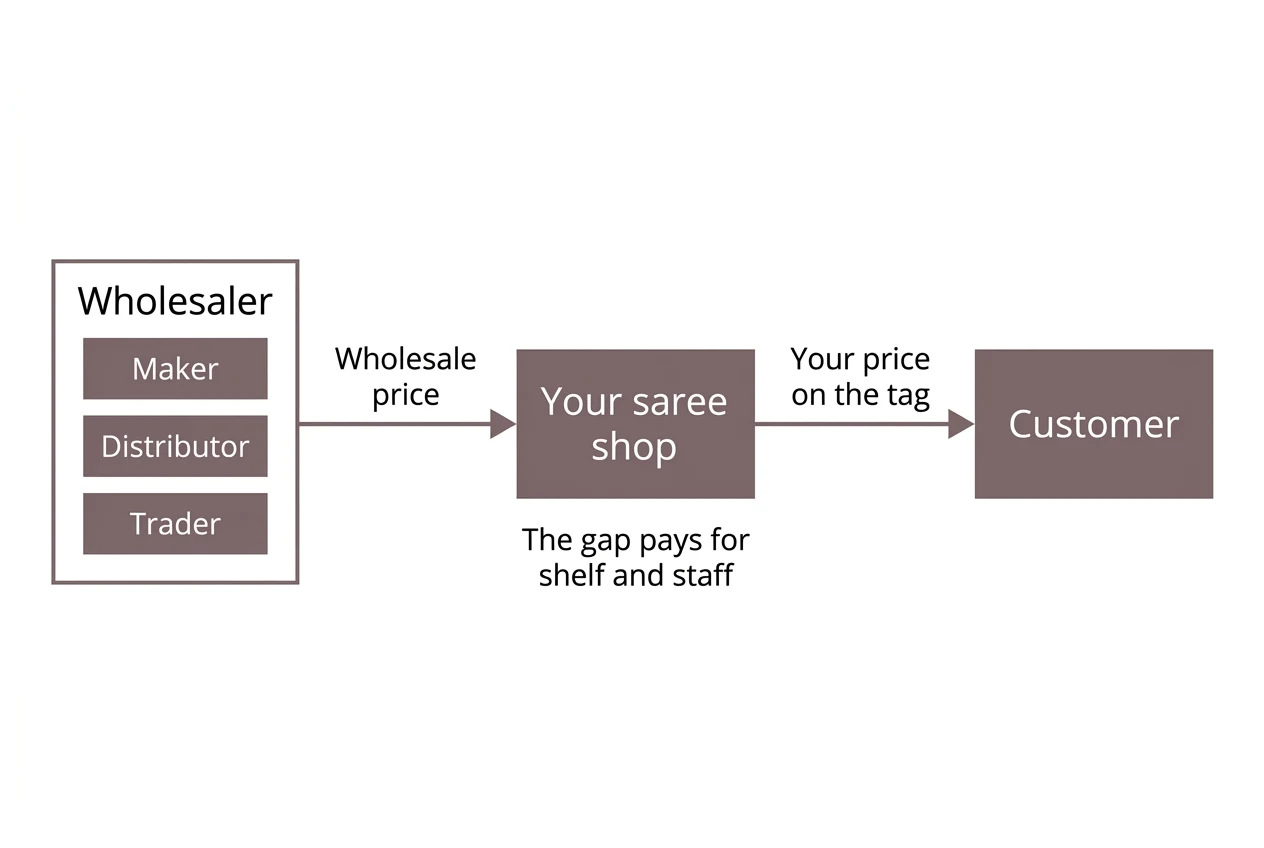
The seller is the wholesaler. That can be the maker, a distributor who buys from many makers, or a trader who holds stock and sells it on in smaller lots. Shopify's explainer on wholesale lists these types, and it adds that bulk is the norm and not a strict rule, since some suppliers sell smaller quantities, especially to a first-time buyer.
The buyer is you, if you run a saree shop. You pay the wholesale price and put your own price on the tag. The gap pays for your shelf and your staff. It's how you make a living, and the retail vs wholesale guide walks through that chain from loom to customer.
Wholesale meaning in everyday use
People use the word three ways, and mixing them up causes confusion.
"Wholesale price" is the lower rate a business pays when it buys many pieces at once. "We sell wholesale" means the seller deals with shops, not single customers, and there's usually a minimum order. Then there's "a wholesale lot", which is a boxed set. A box of 28 sarees is a lot. So is a carton of bangles.
Whichever way it's used, the meaning holds: a business is buying, the quantity is large, and the goods get sold again.
If you'd rather hear it spoken, this short video from Retail & Marketing Concepts explains wholesale and the wholesaler's role.

What are wholesale payments?
Two meanings. A search for the phrase brings up both.
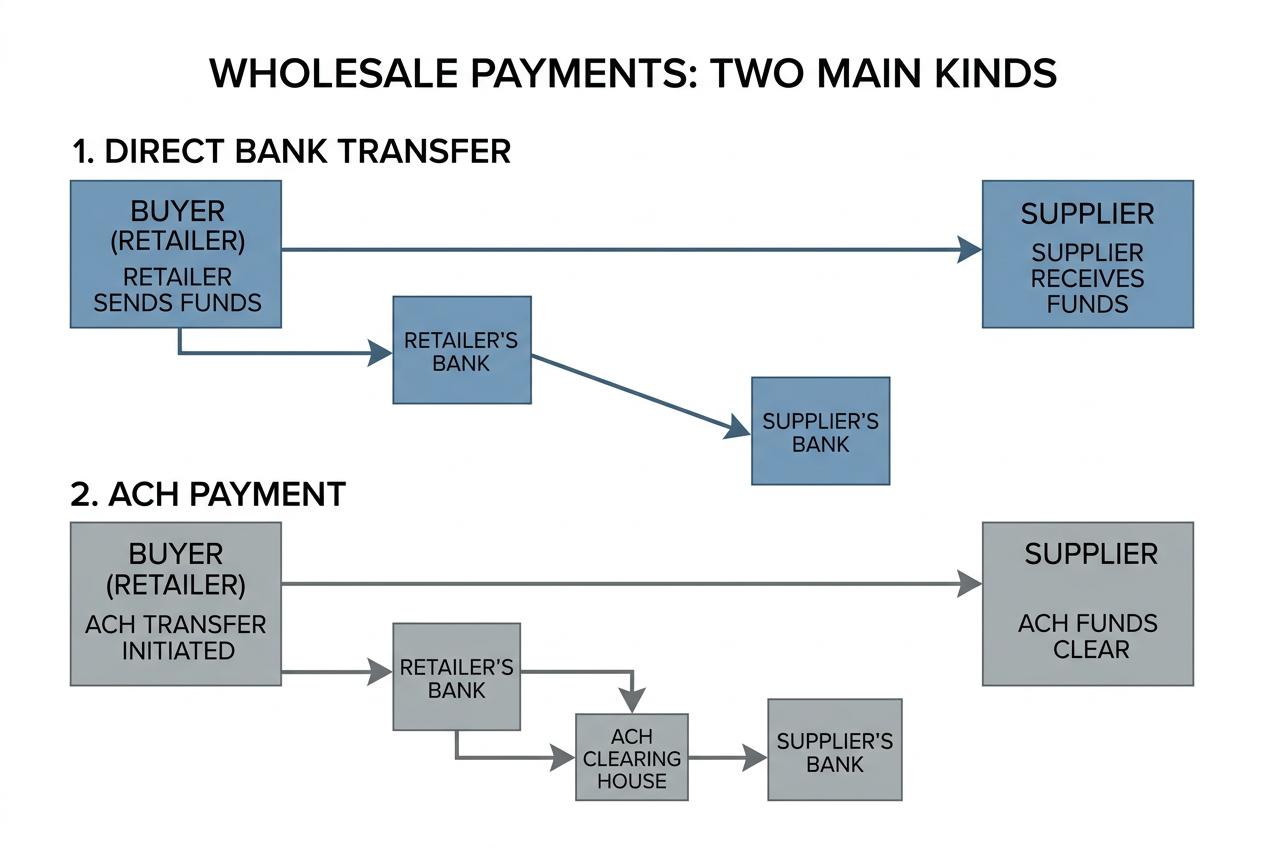
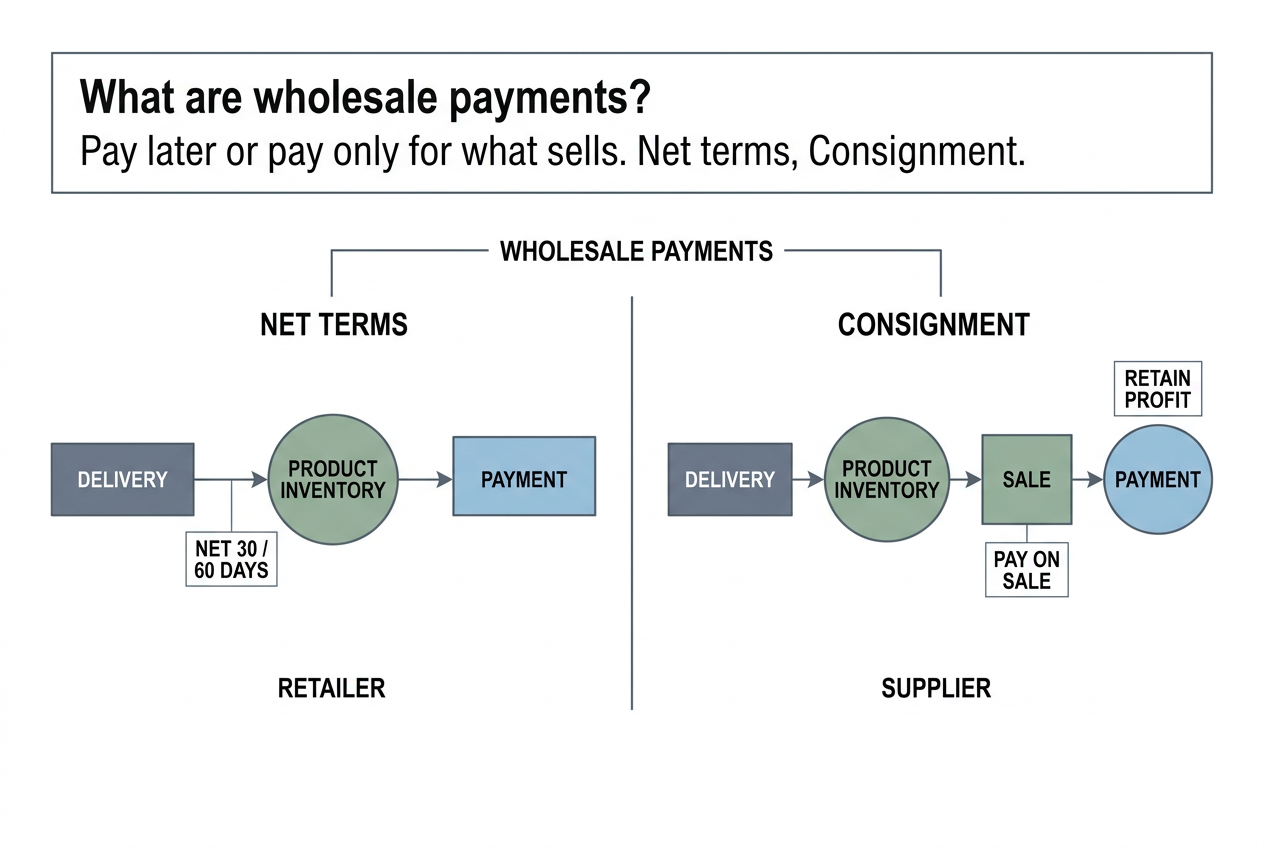
Payments between you and your supplier. This is the trade side. Orders are big, so supplier and buyer agree terms before any goods move. Shopify describes two common ones.
- Net terms. You get the goods and pay later. The usual windows are 30, 60 or 90 days, and the full range runs from seven to 180 days.
- Consignment. You pay only for what sells. Unsold stock goes back to the supplier.
A new buyer usually won't be offered either. Many suppliers want payment first until they know you, and that's normal; what matters is that the terms are clear before you order. At silksaree.shop, payment is agreed with the buyer on WhatsApp. Ask the question early, whoever you buy from.
Payments between banks. In banking, "wholesale payments" means large transfers that settle between banks. In India the main one is RTGS, run by the RBI. Per IndusInd Bank's RTGS guide, it needs a minimum of ₹2 lakh and has no upper limit. Each transfer settles individually, and it runs 24 hours a day, all year.
You'll meet this when you pay a large invoice from a bank account. Small amounts go by UPI or NEFT. A big first order may go by RTGS.
Business strategy tips for a shop that buys wholesale
General habits, not rules from one supplier.
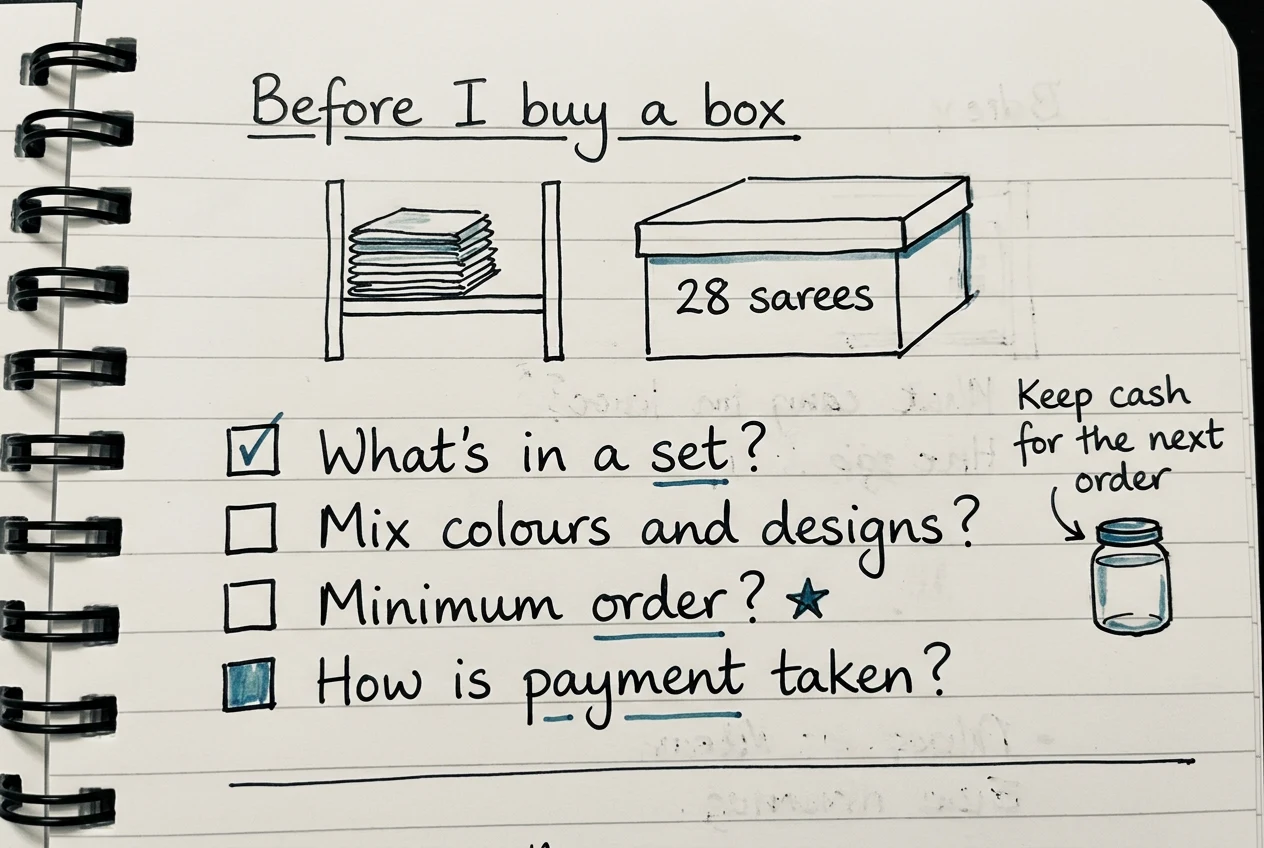
Size the order to your shelf, not your hopes. A box of 28 is 28 sarees on display at once, so count how many you can show and sell in a season before you buy, because until a saree sells, your money is just sitting on a shelf.
Ask four things before you commit. What's in a set? Can colours and designs be mixed? What's the minimum order? How is payment taken? Get the answers in writing, even if it's only a chat message.
Check the cloth, not just the word. Ask whether the sarees are power loom or handloom. They're priced and sold differently. The powerloom vs handloom stock guide shows how to split your stock.
Keep cash for the next order. If one buy uses all your cash, you can't restock when something sells out. Leave a gap.
Find one supplier you trust before you find five. Repeat orders from the same maker teach you what sells in your town, and buying direct from a maker also means fewer hands between the loom and your shelf.
Keep your own records. Note what you paid, what you sold each piece for, and what's left. The accounting guide for small business lists the five records to keep.
Registration and tax rules change. Ask a chartered accountant, not a blog, this one included.
What to do next
Write down two numbers: how many sarees you can honestly sell in a season, and how much cash you can leave in stock. Then message a supplier and ask the four questions above. If you're still deciding whether to open a shop at all, How to Start a Saree Business: Cost, Profit & Steps (2026) sets out three budget plans.
Want to see how a saree house answers? Here is silksaree.shop, a Rayadurg saree house that sells boxed sets of 28 to shops. Browse it below.
The catalogue numbers each saree, so you can quote the number when you enquire. Ask about colours, quantities and prices on WhatsApp. Rates are shared there, not on the site. You can also use the contact page.